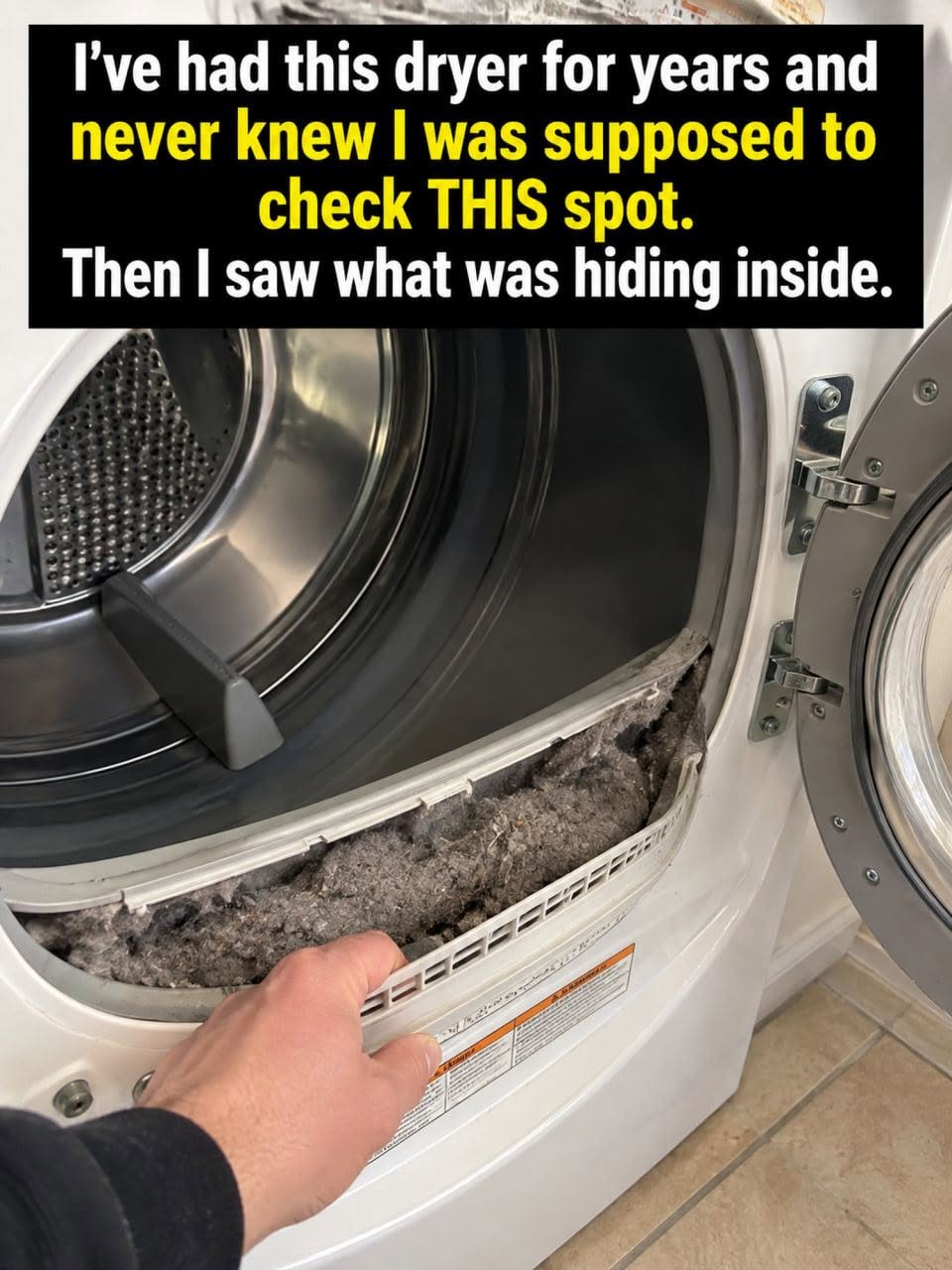
Don’t Forget the Dryer Vent
For a conventional vented dryer, the exhaust duct carries moist air from the appliance to an exterior vent.
Lint can accumulate within this pathway over time, especially if the system has poor airflow, excessive bends, damage, or another problem.
This makes the exhaust system an important part of dryer maintenance.
The appropriate cleaning schedule can depend on the dryer, the vent configuration, how frequently the appliance is used, and the manufacturer’s recommendations.
Check the Exterior Vent Outlet
When the dryer is operating normally, air should be able to exit through the exterior termination of a vented system.
The outside opening should not be obstructed by debris or other material.
If the exhaust flap isn’t behaving normally, airflow seems unusually weak, or you suspect a blockage, investigate safely or contact a qualified professional.
Never reach into moving equipment or attempt maintenance while the dryer is operating.
Long Drying Times Can Be a Clue
One of the easiest dryer problems to ignore is gradually increasing drying time.
If a load that previously dried normally begins requiring substantially longer, something has changed.
There are several possible explanations, including load size, fabric type, moisture level, dryer settings, mechanical problems, and restricted airflow.
Rather than assuming the appliance is simply getting old, check the basic maintenance items recommended by its manufacturer.
Don’t Overload the Dryer
More clothing in one load may seem like a faster way to finish laundry, but an overloaded drum can interfere with normal tumbling and airflow.
Clothing needs room to move so warm air can circulate through the load.
Follow your machine’s recommendations for load size instead of forcing everything into a single cycle.
Keep the Area Around the Dryer Clear
The laundry area can quickly become a storage space for baskets, cleaning supplies, cardboard boxes, towels, and miscellaneous household items.
Keeping unnecessary combustible clutter away from heat-producing appliances is a sensible safety habit.
Also avoid allowing lint and dust to accumulate heavily around or behind the dryer.
Be Careful When Moving the Appliance
Sometimes people discover a surprising amount of lint only after pulling a dryer away from the wall.
But moving a dryer requires care.
The exhaust connection can be damaged, crushed, or disconnected if the appliance is moved improperly. Gas dryers have additional considerations that make careless movement particularly inappropriate.
If you’re unsure how to safely access the area behind your appliance, use a qualified professional.
A Crushed Exhaust Duct Can Cause Problems
A dryer pushed too tightly against a wall may damage or compress certain exhaust configurations.
Restricted ducting can reduce airflow.
The exhaust installation should follow the dryer manufacturer’s requirements and applicable local rules. The correct duct material, dimensions, routing, and maximum allowable length can vary.
Never Treat the Photo as a Universal Instruction
This point is worth emphasizing because household appliances can look similar while being constructed very differently.
A removable component visible near the bottom of one dryer doesn’t mean your dryer contains the same component.
Don’t remove screws, dismantle protective panels, bypass switches, or reach into internal machinery based solely on a social-media image.
Locate your model number and consult the manufacturer’s manual for the maintenance areas designed for owner access.
Unplugging Doesn’t Automatically Make Every Repair Safe
Disconnecting electrical power is an important safety step for many maintenance procedures, but it doesn’t turn an appliance repair into a do-it-yourself job automatically.
Some internal components aren’t intended to be serviced by consumers.
Gas appliances can also involve fuel connections requiring appropriate expertise.
Know the difference between routine owner maintenance and actual appliance repair.
There is also one dryer habit that’s so simple that it’s easy to underestimate its importance.