erosion, while excessive use of abrasive substances can wear the tooth surface.
A whiter smile is not worth damaging your enamel.
9. Some Medications and Dental Conditions Can Affect Tooth Color
Certain medications can cause intrinsic tooth discoloration.
For example, tetracycline-class antibiotics can cause permanent discoloration when exposure occurs during tooth development.
Some dental conditions, including enamel development problems and dental fluorosis, can also affect the appearance of teeth.
If discoloration appeared suddenly or seems unusual, a dentist can help determine the cause.
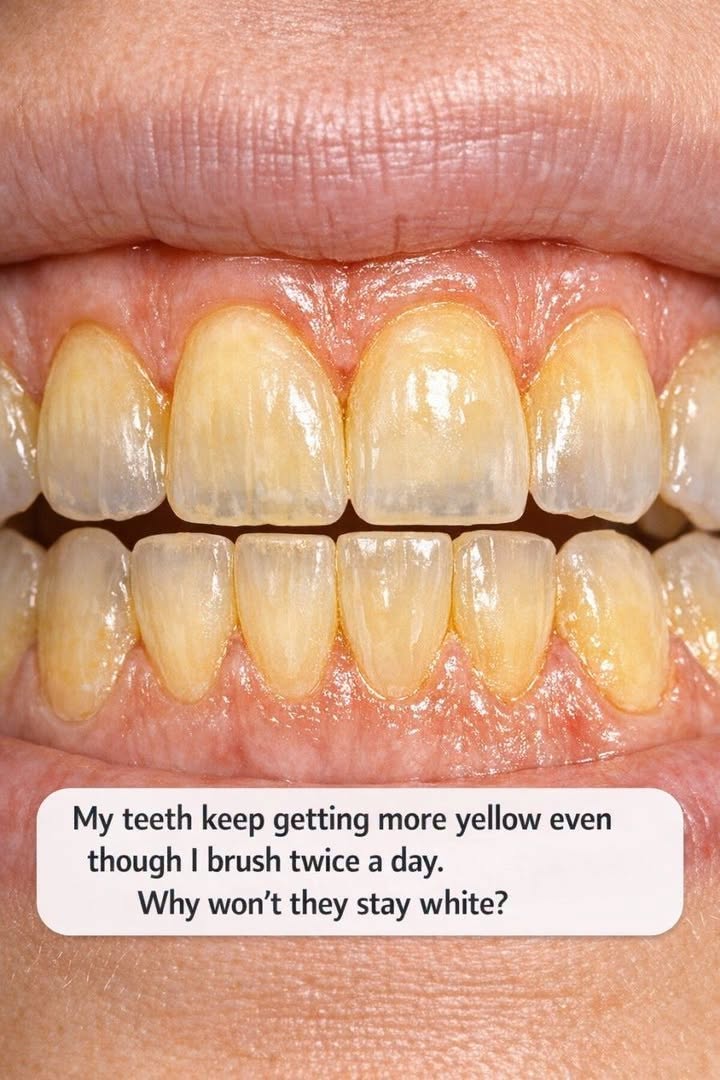
10. Plaque and Tartar Can Make Teeth
Look Yellow
Plaque is a sticky film that develops on teeth.
If plaque isn’t removed properly, it can harden into tartar, also called dental calculus.
Brushing and flossing help control plaque, but hardened tartar generally requires professional removal.
Regular dental examinations can help identify tartar, cavities, gum disease, and other causes of discoloration.
The appropriate frequency of dental visits depends on your individual oral health rather than automatically being the same for everyone.
11. Age and Genetics Also Matter
Teeth can naturally become darker or more yellow-looking with age.
Over