
often describe nail markings as a “clear sign” of a serious disease, it is easy to become worried.
But there is an important fact to understand:
A line on your nail is not, by itself, a diagnosis.
Different types of nail markings have completely different causes. Some are related to normal aging or minor trauma, while others may provide clues that something affected the body while the nail was growing.
Let’s take a closer look at what these lines can mean—and when they deserve medical attention.
Keep reading — tap the
button below to continue.
A line on your nail is not, by itself, a diagnosis.
Different types of nail markings have completely different causes. Some are related to normal aging or minor trauma, while others may provide clues that something affected the body while the nail was growing.
Let’s take a closer look at what these lines can mean—and when they deserve medical attention.
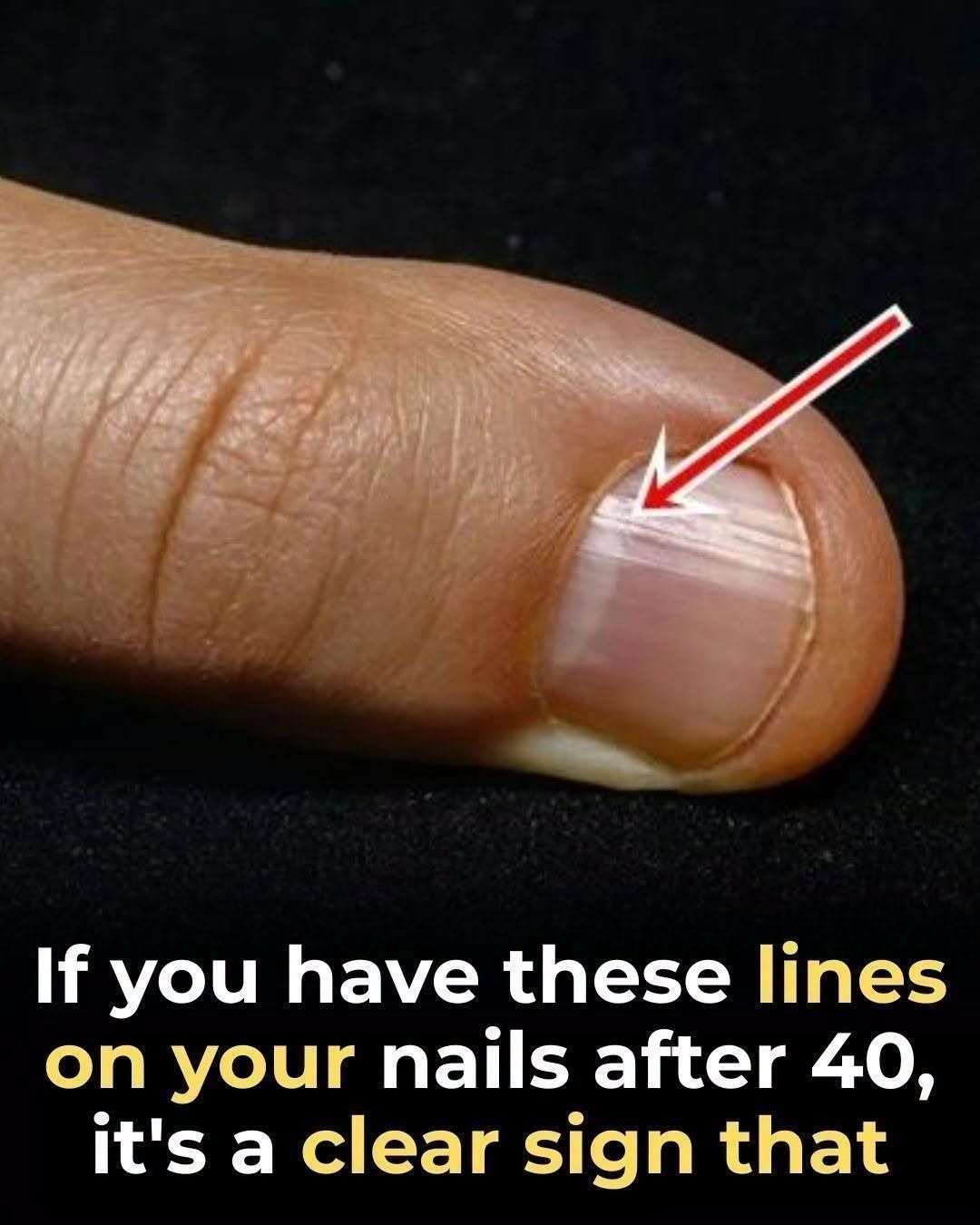
What Are the Lines in the Picture?
The image appears to show transverse markings across the fingernail, with the arrow pointing toward several pale horizontal
New, persistent, unexplained, rapidly changing, or accompanied by other symptoms.
For example, you may want to seek medical advice if several nails suddenly develop unusual grooves or discoloration and you have also experienced significant illness, unexplained weight loss, persistent fatigue, or other changes in your health.
You should also have persistent nail changes evaluated if you cannot identify an obvious cause.
What If Only One Nail Is Affected?
When a change appears on just one nail, local causes become particularly important to consider.
Repeated
pressure, picking, manicures, injuries, or trauma can affect the nail matrix and produce visible changes.
For example, regularly pushing back or damaging the cuticle area can interfere with normal nail growth.
A single abnormal nail therefore doesn’t necessarily indicate a problem affecting the entire body.
However, a persistent unexplained abnormality should still be checked, particularly if the nail changes progressively.
Nail Changes That Deserve Prompt Attention
Not every nail abnormality is urgent, but certain changes should not be ignored.
These include:
- A new dark streak under one
-
- nail
- A dark area that becomes wider or changes
- Bleeding without an obvious injury
- Persistent pain or swelling around a nail
- The nail separating from the nail bed
- Significant nail destruction
- Rapidly changing pigmentation
- A persistent unexplained growth around the nail
A new or changing dark streak can occasionally be associated with melanoma of the nail unit, although there are many benign causes of nail pigmentation as well
That is one reason a changing dark streak deserves professional assessment rather than internet diagnosis.
Can Nutritional Deficiencies Cause Nail Changes?
Nutrition
-
can influence nail health.
Study BiologySevere deficiencies or inadequate nutritional intake may contribute to brittle, thin, or otherwise abnormal nails.
Iron deficiency, for example, can be associated with certain nail changes.
However, you shouldn’t automatically start taking high-dose vitamins simply because you notice a nail line.
Taking unnecessary supplements can sometimes cause harm, and many nail changes have nothing to do with nutritional deficiency.
If a nutritional problem is suspected, a healthcare professional can determine whether blood testing or dietary assessment is appropriate.
What Can You Do to Keep
Your Nails Healthy?
Basic nail care goes a long way.
Keep nails clean and reasonably short. Avoid repeatedly biting, picking, or aggressively pushing back the cuticles.
Wear protective gloves when your hands are exposed to harsh chemicals or prolonged moisture.
Maintain a balanced diet containing adequate protein, iron, zinc, vitamins, and other essential nutrients.
And give your nails time to recover after frequent manicures or other cosmetic treatments if they become damaged.
Try Skin SerumsMost importantly, don’t use the appearance of your nails as a substitute for a medical
Don’t Panic Over a Single Nail Line
The internet has made it incredibly easy to turn ordinary physical changes into frightening medical headlines.
A photograph of a nail with a horizontal line can quickly be described as evidence of cancer, diabetes, vitamin deficiency, heart disease, or another serious condition.
But medicine rarely works that simply.
The same nail appearance can have multiple possible causes.
Doctors consider the patient’s age, medical history, medications, recent illnesses, injuries, other symptoms, and the precise appearance of the nail before reaching a conclusion.
The
Bottom Line
If you notice horizontal lines or grooves on your nails after 40, don’t automatically assume they are a warning of a serious disease.
They may represent Beau’s lines, another type of nail discoloration, previous trauma, normal variation, or an event that temporarily affected nail growth.
The key is understanding the pattern.
Several nails changing at once? That may suggest a systemic event.
One nail changing? Local trauma or another localized cause may be more likely.
A new or changing dark streak? Get it evaluated.
Persistent unexplained changes? Talk
with a healthcare professional.
Your nails can sometimes provide useful clues about your health, but they are not a crystal ball or a diagnostic test.
So the next time you notice a strange line across your nail, don’t panic—and don’t ignore it either.
Take a closer look, think about what happened to your health in the preceding months, and seek professional advice if the change is new, persistent, or unusual.
Keep reading — tap the button below to continue.