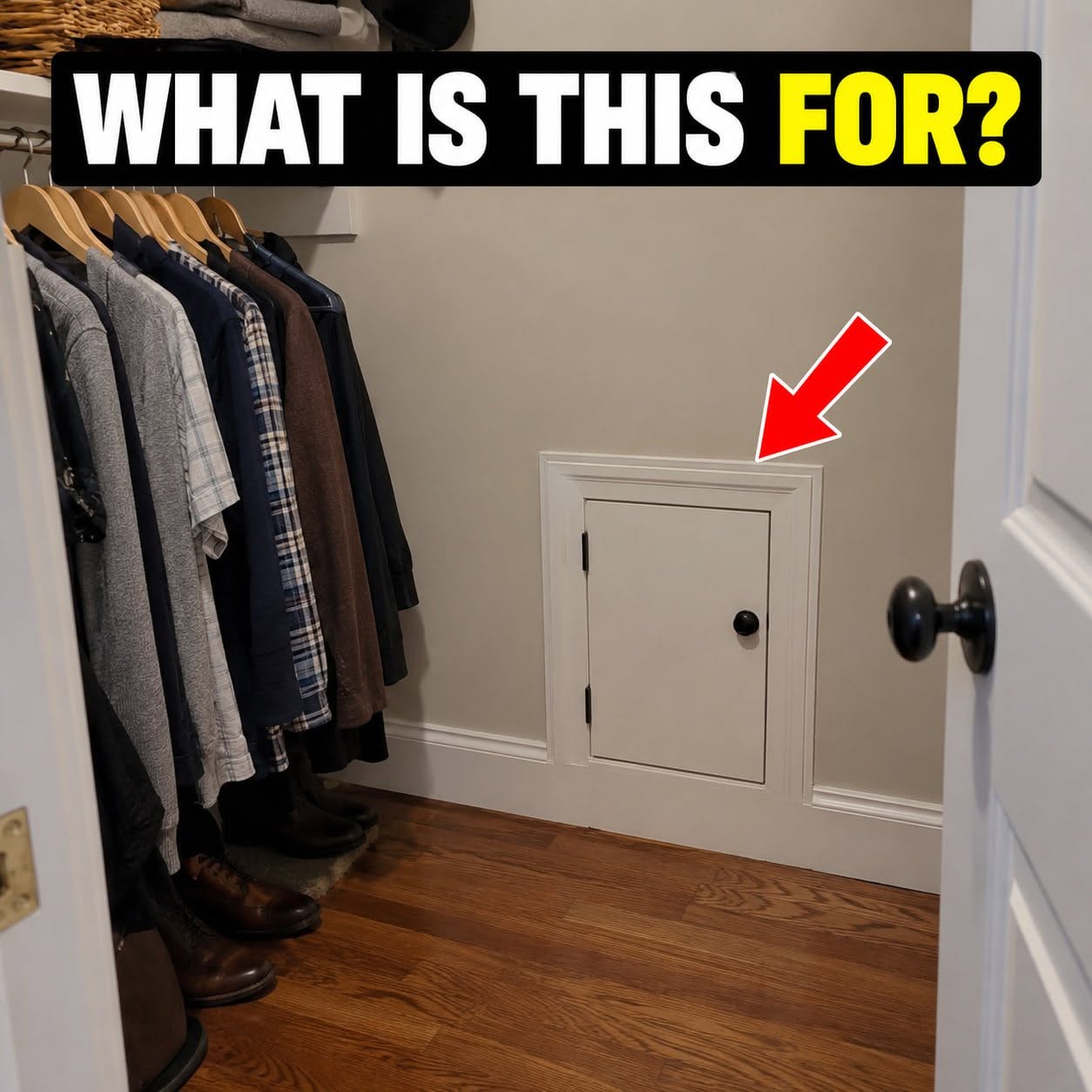
4. Some Small Doors Lead to Utility Spaces
Older houses have often been modified many times during their lives.
Heating systems are replaced. Electrical wiring is upgraded. Bathrooms are remodeled. Air-conditioning ducts are added. Rooms are divided or expanded.
As a result, a small door that looks mysterious today may have been perfectly logical when it was installed decades ago.
It could provide access to pipes, wiring, ductwork, shutoff valves, or another mechanical component hidden behind the finished wall.
Sometimes the equipment itself has been removed, but the original access door remains.
This can make the feature especially confusing to a modern homeowner.
5. Sometimes It Really Was Extra Storage
Older homes often made creative use of spaces that modern construction might simply seal off.
A cavity beneath stairs, behind a knee wall, or beside a chimney could become a small storage compartment.
These spaces were useful for belongings that did not require frequent access.
A tiny door therefore did not necessarily conceal an elaborate mechanical system. Sometimes it was simply the most efficient way to turn otherwise wasted space into storage.
For families living in relatively compact houses, every usable corner could matter.
6. Could It Have Been Part of a Laundry Chute?
Another feature associated with older homes is the laundry chute.
Before laundry rooms became common near bedrooms, dirty clothing often had to be carried to a basement or utility area.
Some houses solved the problem with a vertical chute running between floors.
Small openings allowed family members to drop clothing into the chute, where it would collect closer to the washing area.
However, a laundry-chute opening is generally different from a larger knee-wall access door. Its size, location, and construction can help distinguish between the two.
This is another reason it is better not to assume the purpose of an unusual door based only on its appearance.
7. What About Dumbwaiters?
People sometimes assume that any unusual little door in an old house must have belonged to a dumbwaiter.
Dumbwaiters were small lifts used to move items between floors in certain buildings and larger homes.
But a genuine dumbwaiter requires a vertical shaft and lifting mechanism, so a random small door inside a closet should not automatically be identified as one.
The surrounding architecture usually provides additional evidence if a dumbwaiter once existed.
Why These Features Fascinate Homeowners Today
Modern construction often hides mechanical systems behind standardized access panels.
Older houses can be much less predictable.
They were constructed in different eras, remodeled by different owners, and adapted to technologies that did not exist when the houses were originally built.
That history can leave behind architectural clues.
A doorway may be sealed. A staircase may disappear behind a wall. An old vent may remain after a heating system is removed. A small access door may survive even though the equipment it once served disappeared decades ago.
These details make older homes fascinating because they show how houses evolved alongside the people who lived in them.
How Can You Tell What Your Small Door Was Used For?
If you have one in your home, start with its location.
A door along the sloped upper story of a house may lead behind a knee wall. An opening directly behind a bathtub or shower may provide plumbing access. A small compartment beneath stairs may simply be storage.
You can also look at the depth of the space, the surrounding framing, and whether pipes, wiring, ducts, or insulation are visible.
The age of the house can provide additional clues.
Old floor plans, renovation records, historic photographs, and information from previous owners can sometimes explain features that no longer have an obvious purpose.
Should You Open a Mysterious Access Door?
Usually there is nothing mysterious about the space itself, but an unfamiliar area in an older house should still be approached carefully.
Do not assume that the surface beyond the opening is designed to support your weight.
Attic and eave areas can contain exposed nails, electrical wiring, insulation, pipes, pests, dust, and unfinished framing.
If the door appears painted shut, damaged, connected to electrical equipment, or located near an unfamiliar mechanical system, forcing it open may not be a good idea.
When there is uncertainty, a qualified home inspector or appropriate tradesperson can identify the area without unnecessary damage.
Should You Remove the Door During a Renovation?
That depends entirely on what is behind it.
A seemingly useless little door may still provide essential access to plumbing, electrical connections, HVAC components, or roof areas.
Covering it permanently could turn a simple future repair into a job that requires cutting open a finished wall.
Before removing or sealing an access door, determine why the opening exists and whether anything behind it may need maintenance in the future.
And this is what makes these tiny doors so interesting: two nearly identical doors can have completely different stories behind them.