Friction Is More Likely When:
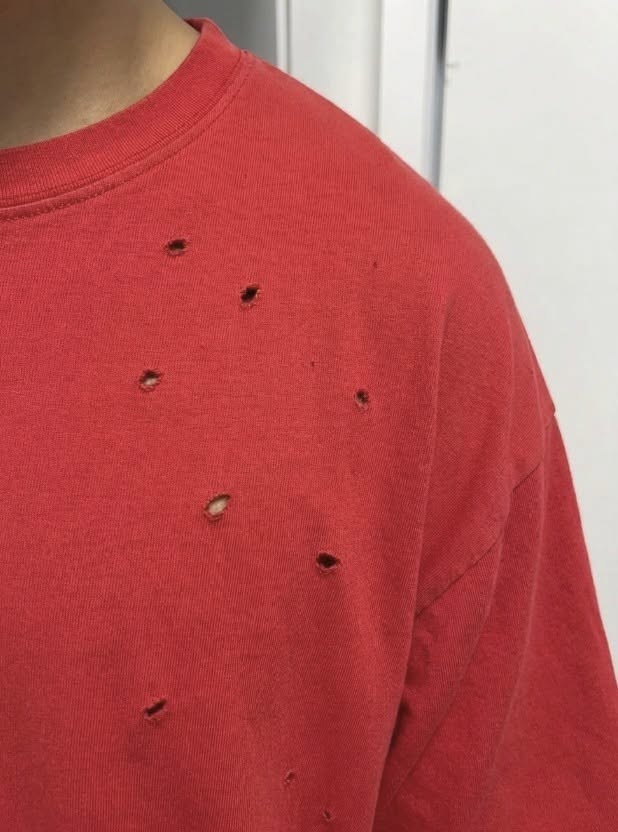
Holes appear in the same area.
Damage is concentrated near shirt hems.
Frequently worn clothing is affected.
The fabric is thin or lightweight.
You regularly lean against counters or desks.
Stored clothing remains unaffected.
Fabric Pests May Be More Likely When:
Stored clothing is being damaged.
Several garments are affected.
Natural animal fibers are involved.
You notice larvae or shed skins.
You find webbing or debris.
Damage is concentrated in dark, undisturbed storage areas.
If you discover evidence of an infestation, addressing the source is more important than simply replacing damaged clothing.
What Should You Do With a Shirt That Already Has a Hole?
A small hole doesn’t necessarily mean the garment needs to be thrown away.
Depending on the material and size of the damage, you may be able to repair it with a needle and thread, a fabric patch, or professional alterations.
For an inexpensive T-shirt, a basic repair may be enough. For wool, silk, cashmere, or sentimental clothing, professional repair can provide a cleaner and more durable result.
Most importantly, try to determine why the hole appeared in the first place. Fixing the cause can prevent the same problem from affecting other garments.
Clothing-Care Habits That Can Extend the Life of Your Wardrobe
Protecting your clothes is largely about avoiding unnecessary wear.
Try to:
Follow the care label on each garment.
Use appropriate washing temperatures.
Close zippers before washing.
Keep delicate fabrics away from abrasive items.
Store clean clothes in a dry, reasonably clean environment.
Keep closets and drawers free of excessive lint and debris.
Avoid leaving damp clothes crumpled for extended periods.
Repair small snags before they develop into larger tears.
None of these habits is complicated, but together they can help your clothes stay in better condition for longer.
Frequently Asked Questions
Why do my T-shirts develop tiny holes near my stomach?
Repeated friction is a common explanation. The lower front of a shirt can rub against countertops, desks, and other surfaces while you move throughout the day.
Can a washing machine cause small holes?
Yes. Fabric can catch on rough or damaged components, zippers, hooks, or other objects. Overloading the machine can also increase stress on clothing.
Do moths actually make holes in clothes?
Moth larvae, rather than adult moths, are responsible for much of the damage associated with clothes moths. However, a hole by itself doesn’t prove that moths are involved.
Can a dryer damage clothing?
Yes. High heat, tumbling, and repeated drying can contribute to fabric wear. Always follow the care instructions for the garment.
What’s the best way to make clothes last longer?
Reduce unnecessary friction, follow care labels, wash delicate items appropriately, avoid overloading the washer, protect garments from rough fasteners, and repair small damage before it gets worse.
The Bottom Line
Finding tiny holes in your favorite clothes doesn’t automatically mean you have a moth problem.
Friction, washing machines, dryers, zippers, fasteners, rough surfaces, and fabric pests can all damage clothing.
The most helpful clue is often the location and pattern of the holes. If several shirts develop tiny holes in the same area, look for something that repeatedly rubs against that part of the fabric. If stored natural-fiber garments are being damaged, investigate the possibility of fabric pests.
Once you identify the cause, prevention becomes much easier.
Sometimes the solution can be surprisingly simple: wear an apron while cooking, change your laundry routine, protect delicate garments,or stop your shirt from rubbing against the edge of the kitchen counter.