Use them fresh with: Roasted potatoes Chicken Pork Bread Soups Vegetables Sauces Olive oil marinades You can also dry the stems for winter use. Bundle small groups loosely and hang them somewhere dry with good airflow, or use another appropriate drying method. Once completely dry, remove the leaves and store them in an airtight container away from heat and direct light. Why Heavy Fall Pruning Can Be a Mistake It can be tempting to make rosemary perfectly neat before winter. But appearance isn’t the plant’s priority. The existing mature growth provides stored energy and structure as the plant enters a slower period. A severe late-season haircut can: Stimulate vulnerable new shoots Reduce the plant’s energy-producing foliage Increase cold sensitivity Expose interior branches Leave permanent bare areas if cuts enter old wood When in doubt during fall, prune less rather than more. You can always finish shaping the plant in spring. What About Rosemary Growing in Warm Climates? Fall pruning is less risky where winters are mild and rosemary continues growing for much of the year. In these conditions, plants may tolerate somewhat more shaping. However, the old-wood rule still applies. Warm weather doesn’t guarantee that a bare woody rosemary branch will regenerate after being cut severely. Maintain green foliage below your cuts whenever possible. What About Rosemary in Pots? Container rosemary requires slightly different thinking. A potted plant may be moved indoors or into a protected location for winter, depending on your climate. Before bringing it inside, inspect carefully for: Aphids Spider mites Whiteflies Scale Other hitchhiking pests You can remove obviously damaged stems and lightly shape the plant if necessary. Avoid drastically reducing it simply to make the pot easier to fit indoors. Give indoor rosemary as much light as possible and maintain good airflow. The Biggest Winter Problem May Not Be Cold Rosemary is a Mediterranean plant adapted to sunny conditions and excellent drainage. Cold can certainly damage less-hardy varieties, but cold combined with wet roots can be particularly destructive. As growth slows, rosemary generally uses less water. Don’t continue watering it as though it were experiencing peak summer growth. Always check the soil. For outdoor rosemary, make sure water drains away from the crown and root zone rather than collecting around the plant. Should You Fertilize Rosemary After Fall Pruning? Usually, no heavy feeding is necessary. Applying high-nitrogen fertilizer in fall can encourage exactly what you’re trying to avoid: a flush of tender new growth before winter. Rosemary generally performs well in relatively lean, well-drained soil. Save routine feeding for active growth when the plant actually needs it. Now Let’s Talk About Spring: The Most Important Rosemary Pruning If fall is the season for restraint, spring is when you can do more meaningful shaping. Once the danger of severe frost has passed and you can see active new growth beginning, inspect your rosemary again. This is the time to evaluate what survived winter and decide how you want the plant to grow during the coming season. Step 1: Wait Until You Can Identify Winter Damage Don’t rush outside after the first warm day and start cutting. Cold-damaged rosemary can look terrible before the plant fully wakes up. Wait until spring growth begins. Living branches should start producing fresh shoots. Branches that remain completely brown and brittle can then be removed with much greater confidence. Step 2: Remove Winter-Killed Wood Follow dead stems toward the base until you reach living tissue. Make clean cuts using sharp pruning shears. If an entire branch is dead, remove it appropriately. Sanitize tools when working with suspicious or diseased material. Step 3: Shape the Plant Once dead material is removed, you can see the shrub’s real structure. Shorten overly long green branches to create the shape you want. Try to encourage a rounded, open plant rather than cutting every stem to exactly the same height. Selective pruning produces a more natural appearance and helps maintain airflow. Step 4: Encourage Branching Rosemary responds well to regular trimming of young green growth. When the end of a growing shoot is removed, buds farther down the leafy stem can produce side branches. More branching creates: A denser plant More harvestable stems Better shape Less legginess This is why frequent modest trimming usually produces a much better rosemary plant than one enormous haircut every few years. How Much Rosemary Can You Prune in Spring? Healthy established rosemary generally tolerates a more substantial spring trim than a fall trim. Still, avoid removing excessive amounts at once. Keeping pruning around the green, actively growing portions of the shrub is much safer than cutting deeply into old wood. If a plant is extremely overgrown, consider reshaping it gradually rather than trying to reduce its size dramatically in a single day. The Problem With Old, Woody Rosemary As rosemary ages, the lower portions naturally become woody. That’s normal. Problems begin when the plant goes years without pruning. Green growth moves farther and farther toward the ends of long woody stems. Eventually, you may have: A bare center Long woody branches Green foliage only at the tips A plant that splits open Sparse lower growth At that stage, aggressive rejuvenation becomes risky because rosemary may not sprout from those old bare sections. Prevention Is Much Easier Start trimming rosemary while it’s young. Light annual pruning encourages branching closer to the center and prevents the plant from becoming excessively woody too quickly. Should Rosemary Be Pruned Before or After Flowering? This depends partly on why you’re growing it. Rosemary flowers are valuable to bees and other pollinators, particularly when few other plants are blooming. If your plant is covered in flowers, consider allowing pollinators to enjoy them before performing major shaping. Once the main flush of flowering finishes, trimming can encourage attractive new vegetative growth. You can still harvest individual stems whenever you need rosemary for cooking. How to Make the Correct Cut You don’t need complicated equipment. Use: Clean bypass pruning shears Small garden scissors for tender growth Gloves if desired Before cutting, follow the branch downward. Find the leafy portion.Before You Cut Back Your Rosemary This Fall, Read This: The Right Way to Prune It for Healthy Spring Growth

Rosemary can grow from a small herb into a surprisingly large, woody shrub.

By the end of summer, plants that looked compact in spring may have long wandering stems, faded flowers, uneven growth, and branches spilling over pathways or neighboring plants.

Naturally, September and fall cleanup season make many gardeners reach for their pruning shears.

But rosemary isn’t a perennial you should simply cut to the ground.

In fact, one aggressive fall pruning can leave a healthy rosemary plant struggling through winter.

The secret is knowing the difference between the light cleanup rosemary can receive in fall and the more important shaping prune that is usually better saved for spring.

If you want a dense, bushy rosemary plant rather than a woody, bare-centered shrub, here’s exactly when—and how—to trim it.

Fall Rosemary Pruning: What You Should Do First
Let’s start with the question many gardeners have as summer ends:

Should rosemary be cut back in fall?

Yes—but usually only lightly.

Early fall can be a useful time to tidy rosemary after its summer growth, especially in climates where the plant remains outdoors through winter.

However, this isn’t normally the time for drastic renovation.

The goal of fall pruning is simple:

Clean it up without encouraging lots of tender new growth immediately before cold weather.

1. Remove Dead, Damaged and Diseased Stems
Begin with the easiest cuts.

Inspect the entire plant and remove branches that are:

Completely dead
Broken
Damaged
Diseased
Rubbing badly against neighboring branches
Dead rosemary stems are usually dry, brittle, and brown.

If you’re uncertain whether a branch is alive, gently scratch a tiny portion of the outer bark.

Green tissue underneath indicates living wood.

Dry brown tissue suggests that section is dead.

Cut dead material back until you reach healthy tissue.

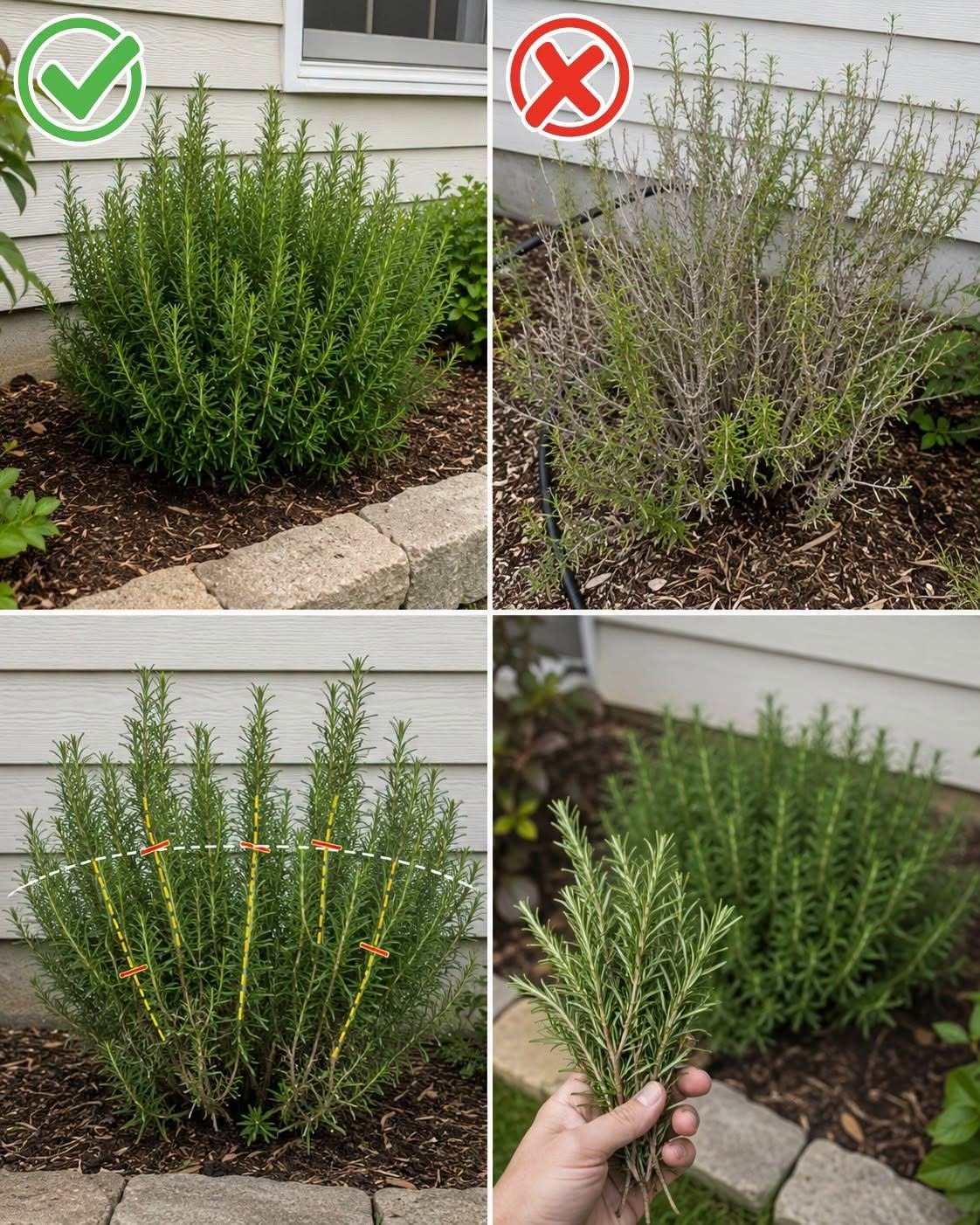
2. Give Long Stems a Light Trim
Rosemary often becomes uneven by late summer.

Some branches may extend far beyond the main plant, creating a loose or sprawling appearance.

You can shorten those stems in early fall.

But keep the cuts conservative.

A useful rule is to remove no more than roughly one-third of the green leafy growth at one time, and less is often safer when winter is approaching.

You’re shaping the plant—not rebuilding it.

3. Don’t Cut Deep Into Bare Woody Stems
This is probably the most important rosemary pruning rule.

Look closely at an older rosemary plant and you’ll notice two distinct kinds of growth:

Green, leafy growth toward the outside.

and

Brown, woody stems toward the center and base.

Whenever possible, make pruning cuts where green foliage remains below the cut.

Rosemary doesn’t reliably regenerate from old, completely bare wood.

If you cut a mature branch back to a leafless brown stump, that branch may never produce new shoots.

This is why neglected rosemary can be difficult to renovate all at once.

Regular light pruning while the plant is young is far safer.

4. Don’t Prune Heavily Right Before Frost
Timing matters.

Pruning can stimulate new growth.

Fresh rosemary shoots are much softer and more vulnerable to cold than mature stems.

If you perform a hard pruning shortly before freezing weather arrives, the plant may produce tender growth that doesn’t have enough time to harden before winter.

In areas with cold winters, finish any meaningful fall trimming well before regular frost is expected.

As the season gets colder, limit yourself mainly to removing damaged or dead material.

5. Harvest Instead of Wasting the Cuttings
One advantage of pruning rosemary is that much of what you remove can go straight into the kitchen.

Choose healthy, fragrant green stems.

Leave a Reply

Your email address will not be published. Required fields are marked *