
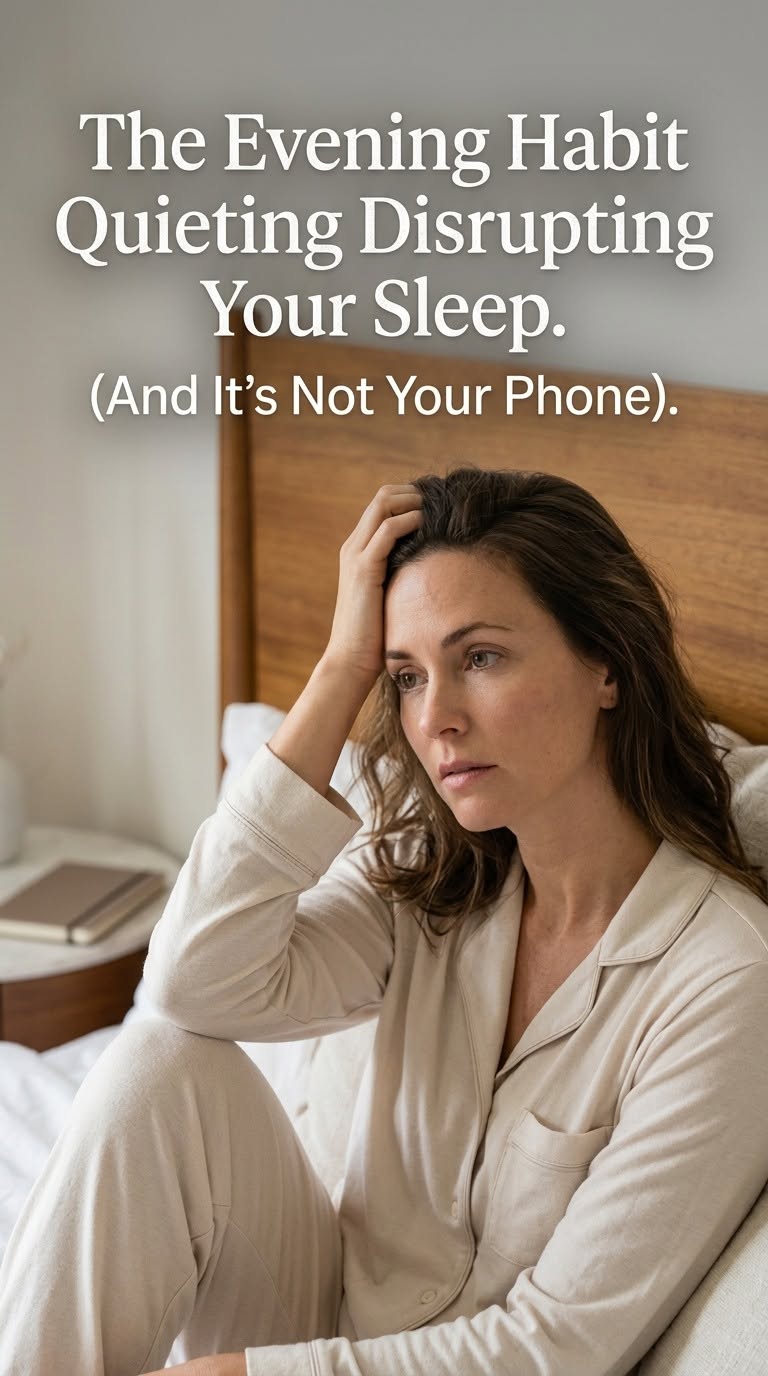
The Simple Evening Habit That Could Be Disrupting Your Sleep (And It Isn’t Screen Time) It happens to millions of people every night. You crawl into bed after a long, exhausting day, ready for eight hours of uninterrupted rest. The room is dark, the temperature is cool, and you even set your phone in another room to avoid blue light. Yet, two hours later, you are staring at the ceiling. Or worse, you fall asleep easily, only to wake up at 3:00 AM with a racing mind, a slightly sour stomach, or an uncomfortable sense of restlessness. When sleep fails us, we tend to blame the usual suspects: stress, late-night scrolling, caffeine, or aging. But there is one subtle, everyday habit that millions of adults repeat every evening without realizing how directly it impacts their body’s internal rhythm. It isn’t what you are watching, and it isn’t necessarily how much stress you carried from your workday. The answer lies in something far more routine—a habit so deeply ingrained in our night-time rituals that most people never think to question it. The Evening Window We Completely Overlook When we think about preparing for sleep, we usually focus on the final thirty minutes before our heads hit the pillow. We dim the lights, wash our faces, and perhaps sip a warm drink. However, your body begins its primary transition into sleep hours before you actually turn off the light. During the late afternoon and early evening, your metabolic rate naturally slows down, your core body temperature begins a gradual decline, and your digestive system starts shifting gears. That is where things get interesting. While your brain is signaling that it is time to wind down, many of us inadvertently send the exact opposite signal to our digestive system. The culprit isn’t just what we eat or drink in the evening—it is the timing and composition of our final intake of the night. Most people understand that a heavy meal right before bed causes discomfort. But there is a lesser-known physiological response that occurs when we consume specific types of foods or liquids within three hours of trying to sleep, even in small amounts. What Happens Inside Your Body While You Sleep To understand why this evening habit matters so much, it helps to look at how your body handles rest. Sleep is not a passive state where the entire body simply “turns off.” It is an active biological recovery process. During deep sleep, your heart rate slows, your blood pressure drops, and your brain clears out cellular waste. However, your body prioritizes digestion above almost everything else. If your stomach is actively working to break down complex fats, heavy proteins, or high-acid ingredients, your core body temperature remains elevated. Here is the detail most people miss: In order to fall asleep and stay in deep sleep, your internal core body temperature must drop by about two degrees Fahrenheit. When your digestive system is working overtime late at night, that crucial temperature drop is delayed. You might still fall asleep out of sheer fatigue, but the quality of your sleep changes dramatically. Instead of spending enough time in restorative deep sleep and REM cycles, your body remains in a lighter, easily disrupted state of rest. This is why you might sleep for eight full hours and still wake up feeling groogy, heavy, or unrefreshed. The Misunderstood Evening Snacks and Drinks Many popular “light” late-night choices are actually hidden sleep disruptors. Consider these common evening choices that seem harmless—or even healthy—on the surface: 1. Citrus and Herbal Teas with Honey A warm mug of tea feels like the ultimate bedtime ritual. However, citrus-based teas (like lemon or hibiscus) or teas sweetened with raw honey or sugar can trigger subtle acid reflux when you lie flat. Even mild, unnoticed acid irritation can send micro-arousal signals to the brain, causing you to wake up briefly throughout the night without realizing why. 2. “Healthy” High-Protein Evening Snacks A spoonful of peanut butter, a cup of Greek yogurt, or a handful of nuts are often recommended to prevent midnight hunger. While protein is essential, high-fat and protein-dense foods take hours to break down. Eating them right before bed forces your stomach to secrete heavy digestive enzymes at the exact time your metabolic rate should be reaching its lowest point. 3. Dehydration (and Over-Hydration) Hydration is critical, but drinking large glasses of water right before bed to “catch up” on your daily intake creates a double-edged sword. Not only does it increase midnight bathroom trips, but chugging cold water quickly lowers stomach temperature abruptly, disrupting natural night-time digestive processes.The Simple Evening Habit That Could Be Disrupting Your Sleep (And It Isn’t Screen Time) It happens to millions of people every night. You crawl into bed after a long, exhausting day, ready for eight hours of uninterrupted rest. The room is dark, the temperature is cool, and you even set your phone in another room to avoid blue light. Yet, two hours later, you are staring at the ceiling. Or worse, you fall asleep easily, only to wake up at 3:00 AM with a racing mind, a slightly sour stomach, or an uncomfortable sense of restlessness. When sleep fails us, we tend to blame the usual suspects: stress, late-night scrolling, caffeine, or aging. But there is one subtle, everyday habit that millions of adults repeat every evening without realizing how directly it impacts their body’s internal rhythm. It isn’t what you are watching, and it isn’t necessarily how much stress you carried from your workday. The answer lies in something far more routine—a habit so deeply ingrained in our night-time rituals that most people never think to question it. The Evening Window We Completely Overlook When we think about preparing for sleep, we usually focus on the final thirty minutes before our heads hit the pillow. We dim the lights, wash our faces, and perhaps sip a warm drink. However, your body begins its primary transition into sleep hours before you actually turn off the light. During the late afternoon and early evening, your metabolic rate naturally slows down, your core body temperature begins a gradual decline, and your digestive system starts shifting gears. That is where things get interesting. While your brain is signaling that it is time to wind down, many of us inadvertently send the exact opposite signal to our digestive system. The culprit isn’t just what we eat or drink in the evening—it is the timing and composition of our final intake of the night. Most people understand that a heavy meal right before bed causes discomfort. But there is a lesser-known physiological response that occurs when we consume specific types of foods or liquids within three hours of trying to sleep, even in small amounts. What Happens Inside Your Body While You Sleep To understand why this evening habit matters so much, it helps to look at how your body handles rest. Sleep is not a passive state where the entire body simply “turns off.” It is an active biological recovery process. During deep sleep, your heart rate slows, your blood pressure drops, and your brain clears out cellular waste. However, your body prioritizes digestion above almost everything else. If your stomach is actively working to break down complex fats, heavy proteins, or high-acid ingredients, your core body temperature remains elevated. Here is the detail most people miss: In order to fall asleep and stay in deep sleep, your internal core body temperature must drop by about two degrees Fahrenheit. When your digestive system is working overtime late at night, that crucial temperature drop is delayed. You might still fall asleep out of sheer fatigue, but the quality of your sleep changes dramatically. Instead of spending enough time in restorative deep sleep and REM cycles, your body remains in a lighter, easily disrupted state of rest. This is why you might sleep for eight full hours and still wake up feeling groogy, heavy, or unrefreshed. The Misunderstood Evening Snacks and Drinks Many popular “light” late-night choices are actually hidden sleep disruptors. Consider these common evening choices that seem harmless—or even healthy—on the surface: 1. Citrus and Herbal Teas with Honey A warm mug of tea feels like the ultimate bedtime ritual. However, citrus-based teas (like lemon or hibiscus) or teas sweetened with raw honey or sugar can trigger subtle acid reflux when you lie flat. Even mild, unnoticed acid irritation can send micro-arousal signals to the brain, causing you to wake up briefly throughout the night without realizing why. 2. “Healthy” High-Protein Evening Snacks A spoonful of peanut butter, a cup of Greek yogurt, or a handful of nuts are often recommended to prevent midnight hunger. While protein is essential, high-fat and protein-dense foods take hours to break down. Eating them right before bed forces your stomach to secrete heavy digestive enzymes at the exact time your metabolic rate should be reaching its lowest point. 3. Dehydration (and Over-Hydration) Hydration is critical, but drinking large glasses of water right before bed to “catch up” on your daily intake creates a double-edged sword. Not only does it increase midnight bathroom trips, but chugging cold water quickly lowers stomach temperature abruptly, disrupting natural night-time digestive processes.

The Difference Between Falling Asleep and Staying Asleep

There is a major distinction between sleep latency (how quickly you fall asleep) and sleep continuity (how well you stay asleep).

Certain evening habits—like taking a hot shower, drinking a warm beverage, or eating a heavy carbohydrate-rich snack—can make you feel temporarily sleepy. Carbohydrates, for instance, cause a quick rise in tryptophan and serotonin, making your eyes feel heavy.

However, the subsequent drop in blood sugar a few hours later can trigger a mild surge of cortisol and adrenaline. This internal chemical spike is often the hidden reason people suddenly snap awake at 2:00 AM or 3:00 AM with their heart beating slightly faster than normal.

It wasn’t a bad dream or a noisy neighbor. It was simply your liver and pancreas responding to a late-night glucose shift.

How to Adjust Your Evening Routine

Making a change does not mean you have to go to bed hungry or eliminate every evening comfort. It is simply about aligning your routine with your body’s natural circadian rhythm.

Here are practical, research-aligned ways to optimize your evening routine:

  • Establish a 3-Hour Buffer: Try to finish your last major meal at least three hours before your target bedtime. This gives your stomach sufficient time to empty its contents into the small intestine, allowing your core temperature to drop naturally.

  • Shift Your Fluid Intake: Concentrate your water intake earlier in the day. If you enjoy a warm drink in the evening, keep it small—around four to six ounces—and consume it at least 60 to 90 minutes before lying down.

  • Keep Evening Snacks Simple and Small: If you genuinely feel hungry before bed, opt for a small, easily digestible option rather than a heavy protein or high-fat snack. A small piece of banana or a few simple whole-grain crackers provide enough complex carbohydrates to calm hunger without overburdening your stomach.

  • Pay Attention to Position: If you experience occasional night-time tightness in your chest or throat, sleeping with your upper torso slightly elevated or lying on your left side can naturally reduce stomach acid from moving upward.

Common Mistakes to Avoid

When trying to fix sleep issues, people often make drastic changes that create new problems.

One common mistake is going to bed completely famished in an attempt to strictly avoid late-night eating. Extreme hunger causes its own cortisol spike, which can make falling asleep just as difficult as eating too much. The goal is metabolic neutrality—neither uncomfortably full nor distracting hungry.

Another mistake is relying heavily on melatonin or sleep supplements without addressing foundational habits. While supplements may help initiate sleep initially, they cannot overcome the physical restlessness caused by elevated core body temperature and late-night digestion.

When to Seek Professional Advice

While adjusting the timing of your evening habits can make a noticeable difference in sleep quality, chronic sleep struggles should never be ignored.

If you consistently experience loud snoring, gasping for air during the night, persistent morning headaches, or severe daytime exhaustion despite spending 7 to 8 hours in bed, it is important to consult a healthcare professional. These can be signs of underlying conditions like sleep apnea or metabolic disorders that require proper medical evaluation and a tailored treatment plan.

The Takeaway

Sleep is not just something that happens in your brain—it is an all-body experience. By giving your digestive system a head start before you turn out the lights, you allow your core temperature to drop, your heart rate to settle, and your body to enter the deep, restorative rest it actually needs.

Sometimes, the key to waking up refreshed isn’t adding another supplement or buying a new pillow. It is simply giving your body the quiet window it needs to wind down naturally.


Leave a Reply

Your email address will not be published. Required fields are marked *