

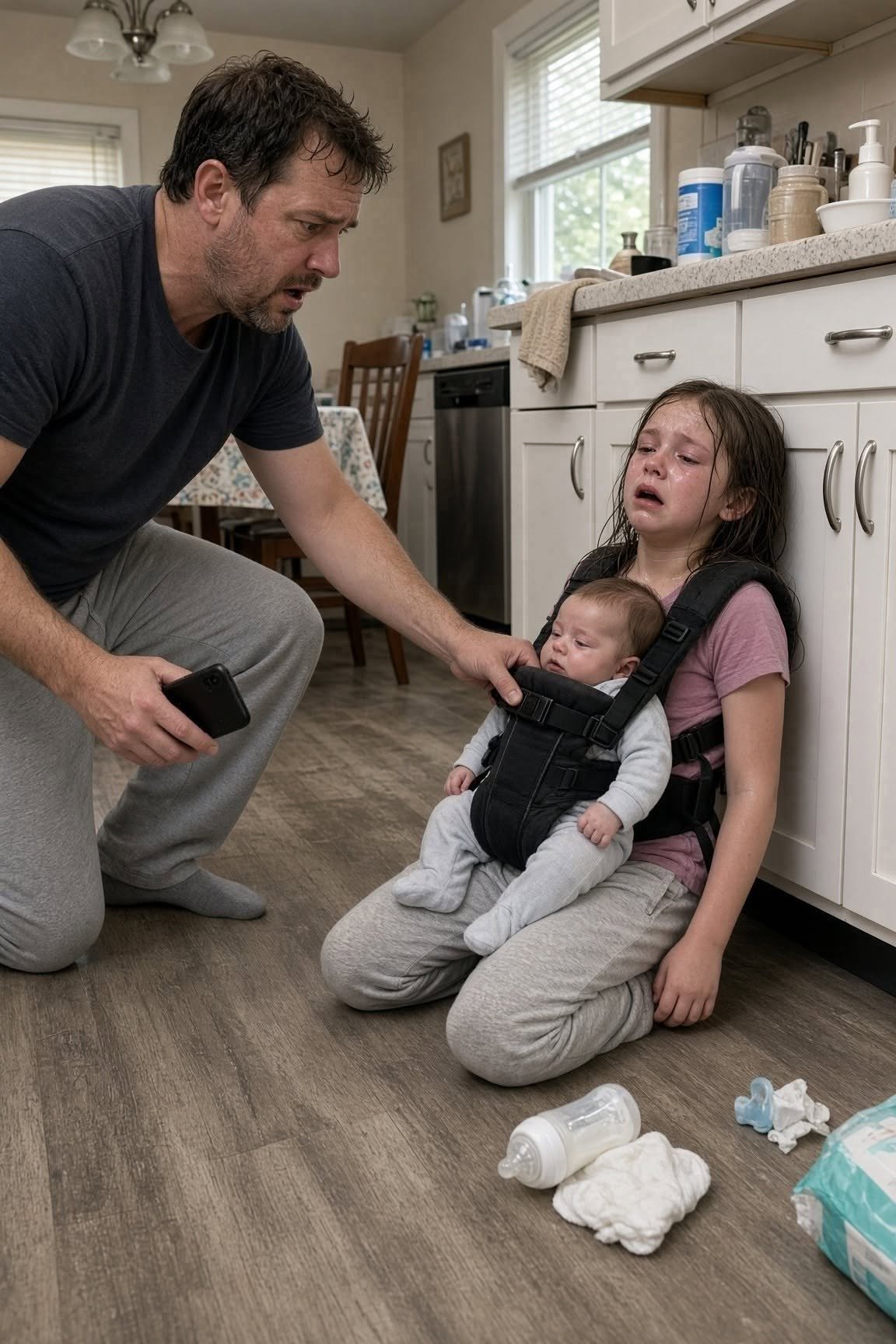
“What if it’s just 17 minutes?”
“No.”
She looked relieved before she looked sad.
That told me more than anything else had.
The next morning, I wrote down the timeline while it was still fresh.
Not because I wanted to turn our family into an investigation, but because I had spent nearly 15 years training dogs by watching what actually happened instead of what someone later wished had happened.
Pressure changes memory.
Facts help.
I had Tessa’s call time.
I had the 1:17 p.m. notification on the second phone.
I had the message telling their mother to leave the kids with Tessa.
And I had Tessa’s account of being told to say her mother had gone for groceries if I returned early.
I did not ask Tessa to repeat the story over and over.
Once was enough.
Her job was to be nine.
Mine was to remember.
Their mother and I spoke again three days later after the immediate anger had stopped controlling every sentence.
We met at the house while the kids were elsewhere with someone we both trusted.
She admitted she had kept the second phone because she knew the messages with R would damage our relationship if I saw them.
She also admitted that leaving that afternoon had not been an emergency.
R wanted her to come.
She wanted to go.
She expected to be back before anyone noticed.
That was the whole ugly mechanism.
There was no complicated explanation hiding underneath it.
She had convinced herself that a short lie would disappear if nothing went wrong.
Then something did.
“What happens now?” she asked.
“I don’t know what happens to us yet,” I said. “But I know what happens with the kids.”
She waited.
“They are not going to be left without an adult because either of us wants to be somewhere else.”
She nodded.
“And Tessa is never going to be used as cover again.”
Another nod.
“If she calls me, nobody punishes her for it.”
“I wouldn’t.”