13. How often I clean them now
Now that I know how quickly grease builds up, I do a quick wipe every 2 weeks and a more thorough cleaning once a month. That schedule keeps the film from ever getting gummy. The maintenance wipe takes maybe 60 seconds per plate.
If you fry foods often, cook with splattering oil, or don’t always run the range hood, weekly is even better. Kitchens with poor ventilation collect that residue faster than people expect. The closer the switch is to the stove, the more often it needs attention.
14. A few habits that reduce the buildup in the first place
The biggest help is running the exhaust fan every time I cook, not just when something smokes. Even 10 to 15 minutes of ventilation during and after cooking cuts down on airborne grease. Using splatter screens for bacon, pan-frying, or shallow-frying also makes a noticeable difference.
I also wash my hands after handling oil or raw meat before touching switches, drawer pulls, or the fridge handle. That one habit alone keeps grime from layering up. It sounds obvious, but in the middle of cooking, it’s easy to tap a switch with oily fingers and forget about it.
15. The reason this trick feels almost effortless
What makes this method so easy is that it replaces force with timing. Heat softens the residue, dish soap breaks it down, and a short wait gives the cleaner time to work. You’re not attacking hardened grease dry, which is what turns a small chore into an annoying one.
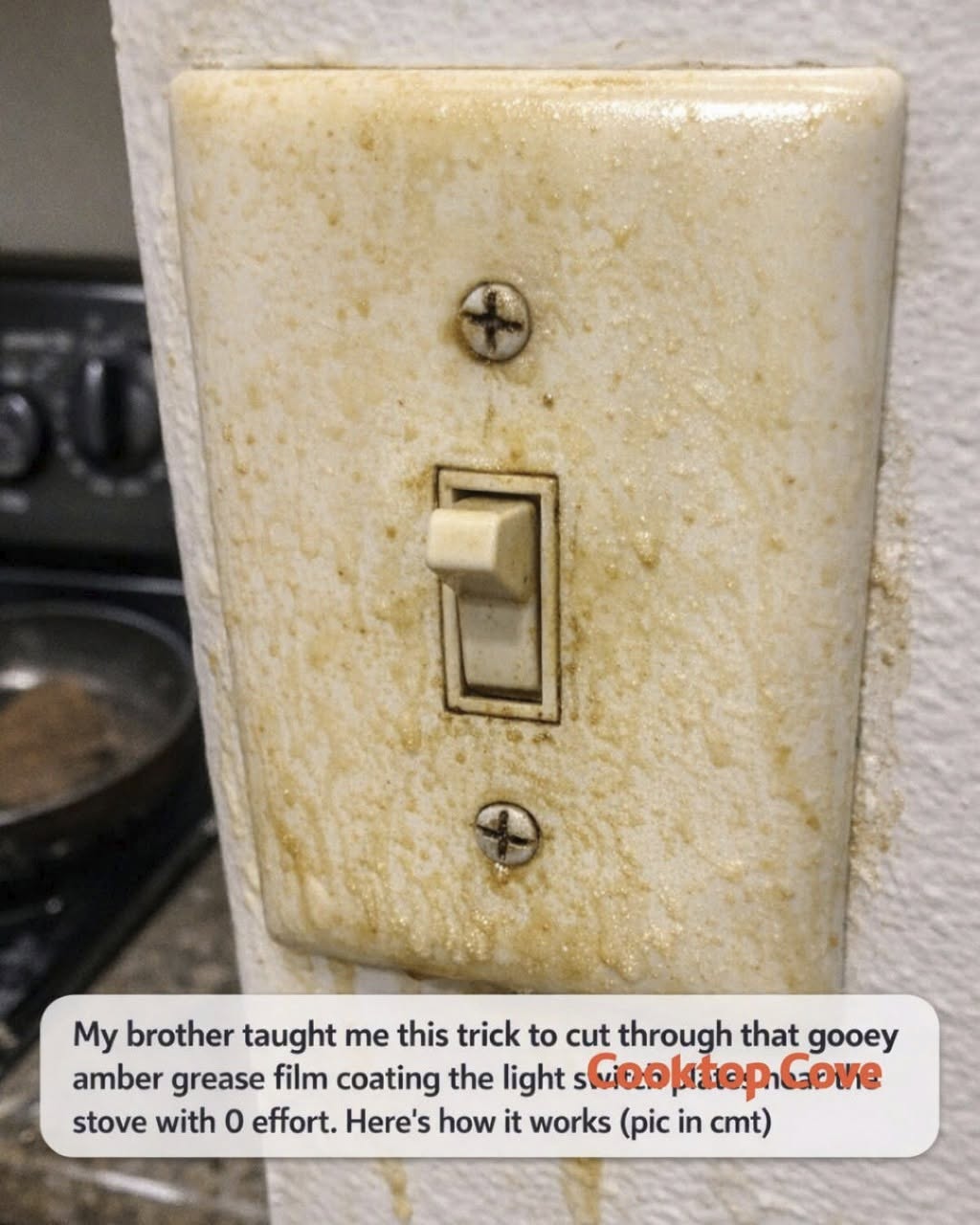
That’s why I still think of it as my brother’s trick, even though it’s so simple. It changed the job from one I put off for months to one I can finish in under 5 minutes. And once you see that amber film come off in the cloth instead of staying glued to the plate, you’ll probably never go back to scrubbing it the hard way again.