

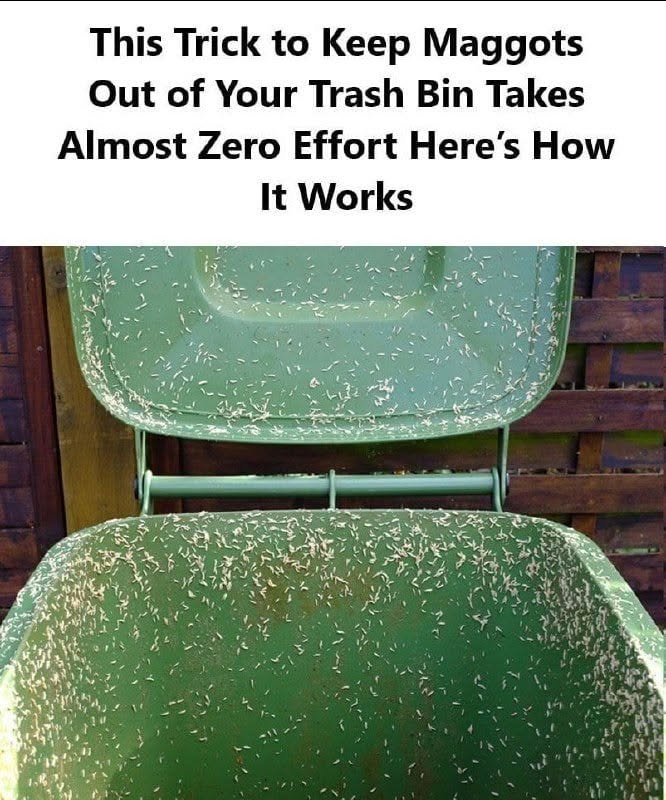
How to Clean an Infested Trash Bin
After the garbage has been removed, the container should be cleaned thoroughly.
Choose an outdoor location where wash water can be handled appropriately and will not contaminate food-preparation areas.
Remove loose debris first.
Then wash the inside surfaces using water and an appropriate household detergent or cleaner according to its label directions.
Pay special attention to the bottom, corners, lid, handles, hinges, and rim.
Why Scrubbing Matters
Simply rinsing a heavily soiled container may leave behind a thin film of grease and decomposing organic material.
Physical scrubbing helps loosen this residue.
A long-handled brush dedicated to garbage-bin cleaning can make the task easier and keeps your hands farther away from dirty surfaces.
Rinse Away Remaining Residue
After scrubbing, rinse the container appropriately.
The objective is to remove the material that attracted flies rather than merely cover its smell.
Follow local guidance regarding where dirty wash water should be disposed of. Avoid directing heavily contaminated water toward vegetable gardens, children’s play areas, or natural waterways.
Let the Bin Dry Completely
Drying is an important but frequently skipped step.
If possible, allow the empty container to dry thoroughly before placing another bag inside.
Standing water and persistent dampness can contribute to odor and create a more favorable environment for pests.
What About Boiling Water?
Very hot or boiling water is often recommended online for killing maggots.
Heat can kill larvae, but pouring boiling water into a household trash bin is not always the best option.
Boiling water can cause serious burns if it splashes, and very hot water may deform or damage certain plastic containers.
If you are considering hot water, check what the container can safely tolerate and prioritize safe handling.
In many situations, removing the waste and thoroughly washing the bin is enough without carrying a large container of boiling water outdoors.
Can Salt Kill Maggots?
Salt is another frequently recommended household remedy.
It can draw moisture from larvae and may make a small affected area less favorable.
However, salt should not become the primary prevention strategy.
A large pile of salt cannot compensate for exposed meat, leaking garbage bags, or a dirty container.
Excessive salt can also be undesirable if it is washed into soil, lawns, or plants.
If salt is used at all, use it sparingly and keep the focus on sanitation and waste management.
Does Vinegar Get Rid of Maggots?
Vinegar is frequently suggested for garbage-bin cleaning because its strong odor and acidity make it a popular household cleaning ingredient.
However, it is not necessary to rely on vinegar to control an infestation.
Removing the contaminated material and cleaning away food residue are more important.
Vinegar should also not be combined with household bleach.
Never Mix Vinegar and Chlorine Bleach
This is an important household safety rule.
Combining chlorine bleach with acids such as vinegar can release dangerous chlorine gas.
Never mix cleaning chemicals simply because individual ingredients are recommended in different online cleaning recipes.
Use one suitable product according to its label and rinse as directed.
Never Mix Bleach and Ammonia
Bleach should also never be mixed with ammonia or ammonia-containing cleaners because hazardous gases can be produced.
More cleaning chemicals do not automatically mean better cleaning.
Simple cleaning performed correctly is generally safer than an improvised chemical mixture.
Cleaning and Disinfecting Are Different
Cleaning physically removes dirt, food residue, grease, and organic material.
Disinfecting uses an appropriate product to reduce certain microorganisms on a suitable surface.
A dirty bin should generally be cleaned before any disinfecting step because heavy organic residue can interfere with some disinfectants.
If you decide disinfection is necessary, use a product suitable for the surface and follow its label for dilution, contact time, ventilation, rinsing, and safety precautions.
Do You Need Insecticide?
For a small infestation confined to a garbage bin, insecticide is often unnecessary.
Removing the food source, disposing of the larvae, cleaning the container, and preventing new fly access can interrupt the cycle.
If pesticides are considered, use only products labeled for the intended location and pest, and follow the instructions carefully.
Never casually spray pesticides around exposed food, kitchen surfaces, children, pets, or areas not permitted by the product label.
The Most Effective Long-Term Solution: Block Access to Food
Once the bin is clean, prevention becomes the priority.
Flies cannot lay eggs on food waste they cannot reach.
That makes careful waste containment one of the most effective ways to prevent another infestation.
1. Seal Garbage Bags Properly
Do not leave bags open inside the bin.
Tie or otherwise securely close garbage bags before placing them into the outdoor container.
This is particularly important when the bag contains meat, fish, pet food, or other highly perishable material.
2. Avoid Overfilling Bags
An overfilled garbage bag is more likely to tear.
Sharp packaging, bones, cans, and other objects can puncture thin plastic and allow food residue to leak into the bottom of the container.
Using a suitably strong bag and avoiding excessive weight can reduce leaks.
3. Wrap High-Risk Food Waste
Some households find it useful to wrap especially messy food scraps before placing them into the main garbage bag.
Depending on local waste rules, appropriate materials may include used paper, paper bags, suitable food packaging, or approved compostable liners where appropriate.
The purpose is not to create unnecessary packaging. It is to reduce leakage and make the waste less accessible to flies.
4. Be Especially Careful With Meat and Fish
Meat and seafood scraps can produce strong odors quickly in hot weather.
If collection is several days away, some households choose to keep well-sealed meat or fish scraps frozen until close to collection time, provided this is hygienic and practical for their home.
Clearly contain the waste so that it cannot contaminate food or freezer surfaces.
5. Keep the Lid Closed
A closed lid creates an important physical barrier between flies and garbage.
Check that the lid closes completely after every use.
A warped, damaged, or poorly fitted lid can allow flies easy access.
6. Do Not Overfill the Bin
When garbage rises above the rim, the lid may remain partially open.
Even a small opening can make it easier for flies to reach food waste.
Keeping the container within its intended capacity helps the lid close properly.
7. Clean the Rim and Lid
People often clean the bottom of a bin but ignore the lid.
Food can touch the lid when a bag is overfilled, while spills can collect around handles and hinges.
These areas should be cleaned whenever visible residue develops.
8. Control Liquid at the Bottom
Inspect the bin after collection.
If liquid is present, determine where it came from.
Possible causes include leaking food bags, rain entering through an open lid, condensation, discarded beverages, and wet household waste.
Fixing the cause is better than repeatedly trying to absorb a large amount of liquid.
9. Use Absorbent Material Carefully
A small amount of newspaper, cardboard, or another appropriate absorbent material can sometimes help catch minor leaks at the bottom of a bin.
Replace it when wet or dirty.
Do not allow saturated paper to sit at the bottom for weeks because wet, food-soiled material can become part of the problem.
10. Keep the Bin in the Shade When Possible
A shaded location can help reduce heating and slow the decomposition of food waste.
Make sure the location remains practical, secure, and compliant with local collection requirements.
One of the best summer tricks has nothing to do with sprays or chemicals—it is changing how the smelliest food waste is stored during the days before collection.