
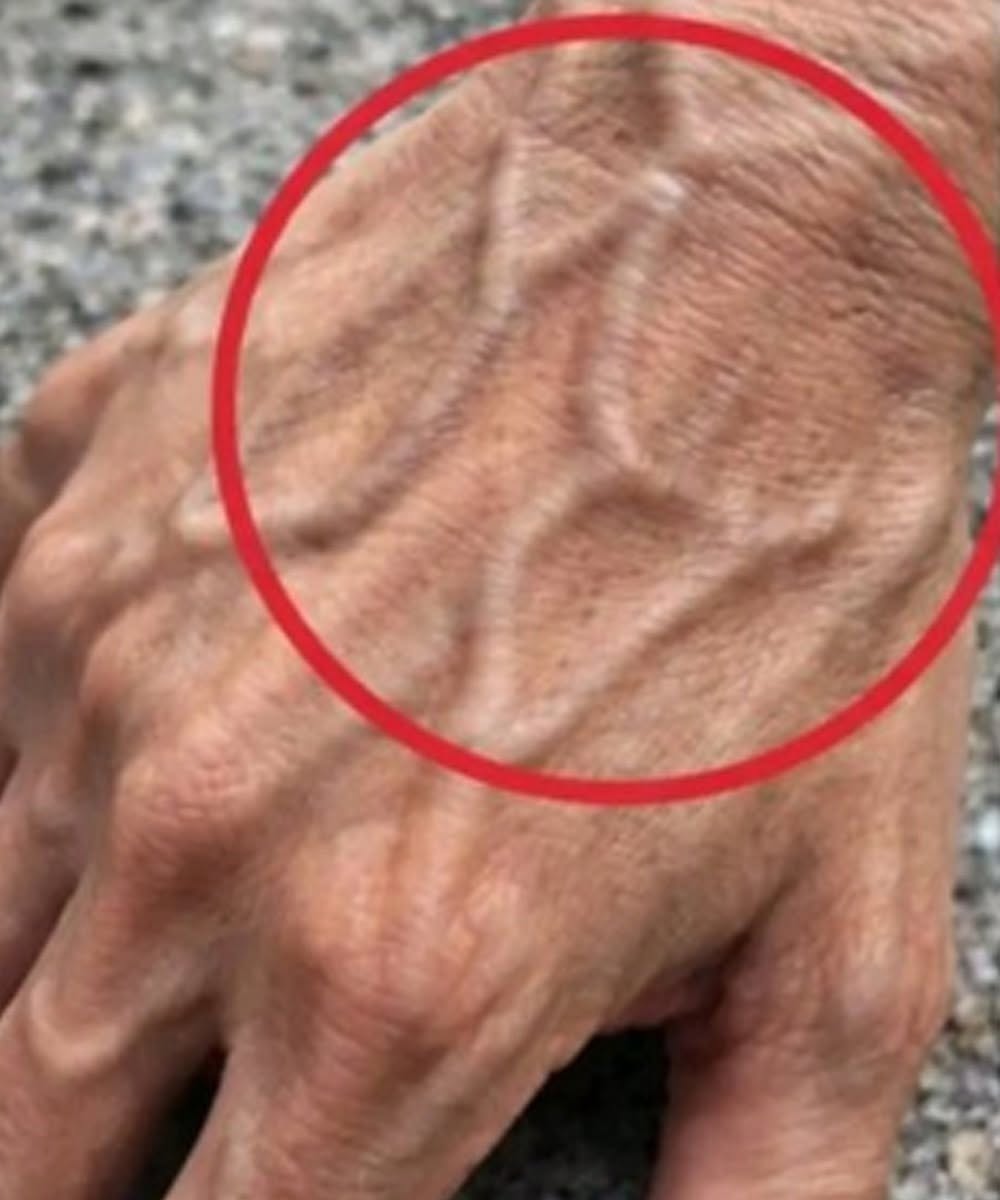
Have you ever looked down at your hands and noticed that the veins seem much more noticeable than they used to be?
Those blue or green lines can sometimes look surprisingly prominent, especially on the backs of the hands. And naturally, you may wonder whether they’re simply a normal part of your appearance—or a sign that something has changed inside your body.
The good news is that visible hand veins are usually completely normal. Exercise, age, body composition, genetics, and even hot weather can all make veins easier to see.
But there are situations where a sudden change deserves attention.
Why Are the Veins on Your Hands So Visible?
Veins in the hands are relatively close to the surface of the skin. When the skin becomes thinner or there is less tissue covering the veins, they naturally become easier to see.
For many people, this is simply a normal physical characteristic.
1. Aging
As we get older, the skin gradually becomes thinner and loses some collagen and elasticity. The layer of fat beneath the skin can also decrease.
Together, these changes can make the veins on the hands look much more prominent.
2. Exercise
Have you ever noticed your veins “popping out” after lifting weights or doing an intense workout?
There’s a simple explanation.
Exercise increases blood flow, and the veins can temporarily become more noticeable. This is particularly common after strength training or activities that involve the arms and hands.
For people who exercise regularly and have relatively low body fat, prominent veins may remain noticeable even when they’re not working out.
3. Low Body Fat
Body fat provides some natural padding between the skin and underlying blood vessels.
When someone loses a significant amount of weight or naturally has a lean physique, veins can become easier to see.
This doesn’t necessarily indicate a health problem.
4. Hot Weather
Temperature can also change the appearance of your veins.
When you’re hot, blood vessels widen as part of the body’s process for releasing heat. As a result, veins near the surface can appear larger or more pronounced.
You may therefore notice your hands looking particularly “veiny” during hot weather or after spending time in a warm environment.
5. Genetics
Some people simply inherit more prominent veins.
Skin thickness, body structure, and the natural position of superficial veins can vary considerably from one person to another.
So if visible veins run in your family, there may be nothing unusual about yours.
When Should You Pay More Attention?
Visible veins by themselves are generally not a reliable sign of disease.
However, a sudden change accompanied by other symptoms is different.
Pay attention if a prominent vein is accompanied by:
- Pain or tenderness
- Swelling
- Redness
- Warmth around the vein
- A hard or cord-like feeling
- Significant skin discoloration
- A sudden change affecting only one hand or arm
These symptoms can sometimes occur with inflammation or other vascular problems and should be evaluated by a healthcare professional.
Don’t Assume Visible Veins Mean Poor Circulation
One common misconception is that prominent veins automatically mean your circulation is poor.
That’s not necessarily true.
Healthy people can have very visible hand veins simply because of their genetics, age, body composition, physical activity, or skin characteristics.
Likewise, visible veins alone cannot diagnose conditions such as diabetes, high blood pressure, or heart disease.
A Sudden Change Is More Important Than Appearance Alone
There’s a big difference between someone who has always had prominent hand veins and someone whose veins suddenly become swollen and painful.
A gradual change associated with aging or weight loss is often harmless.
A sudden change accompanied by discomfort, swelling, redness, or warmth deserves more attention.
The key isn’t simply how visible the veins are.
It’s what else is happening at the same time.
What Can You Do?
If your hand veins are simply more noticeable but there are no other concerning symptoms, there’s usually no need to panic.
You can simply observe whether their appearance changes with:
- Exercise
- Temperature
- Hydration
- Weight changes
- Hand position
If you’re uncertain about a persistent or unusual change, speaking with a healthcare professional can provide reassurance and help determine whether further evaluation is necessary.
The Bottom Line
Seeing prominent veins on your hands can look alarming, but in most cases, it’s simply part of normal anatomy.
Aging, exercise, low body fat, heat, sun exposure, and genetics can all make hand veins more visible.
What matters most is whether the change is accompanied by symptoms such as pain, swelling, redness, warmth, or a hard feeling along the vein.
So the next time you notice those blue lines on your hands, don’t automatically assume something is wrong.