

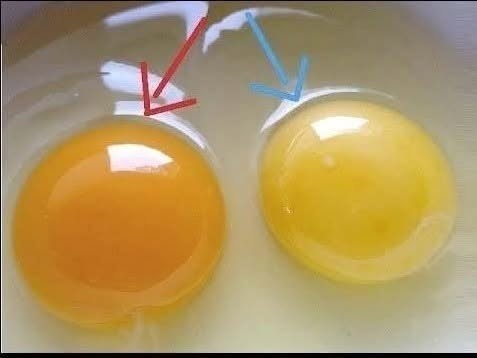
A fresh egg generally has a rounded, firm yolk that sits high above the white. An older egg often has a flatter, weaker yolk that breaks more easily.
ADVERTISEMENT
Yolk color is often misunderstood. A deep yellow or orange yolk does not automatically mean the hen was healthier. Yolk color is strongly influenced by the hen’s diet, particularly pigments found in plants and feed. Hens eating different diets can produce eggs with noticeably different yolk colors while remaining healthy.
4. Smell the Egg
One of the simplest ways to identify a spoiled egg is its smell. A fresh egg should have little or no unpleasant odor. If an egg smells strongly rotten, sulfurous, or otherwise abnormal after cracking, do not eat it.
Do not taste an egg to determine whether it is safe. When in doubt, throw it away.
5. Consider How the Hen Was Raised
If you are buying eggs directly from a farmer, ask about the hens’ living conditions and diet. Healthy hens generally have access to appropriate feed, clean drinking water, adequate shelter, and suitable living conditions.
Terms such as free-range, pasture-raised, organic, or cage-free describe production systems, but they do not by themselves guarantee that every individual hen is healthy. Look for a trustworthy farmer or producer who maintains good hygiene, animal care, and food-safety practices.
6. Check Freshness Properly
You may have heard of the “float test,” where an egg is placed in water. An egg that sinks is generally fresher than one that floats because the air pocket inside the egg becomes larger over time. However, this test primarily indicates age, not whether the hen was healthy or whether the egg is microbiologically safe.
For safety, keep eggs properly refrigerated when required and follow the storage instructions or local food-safety guidance.
A Simple Egg-Quality Check