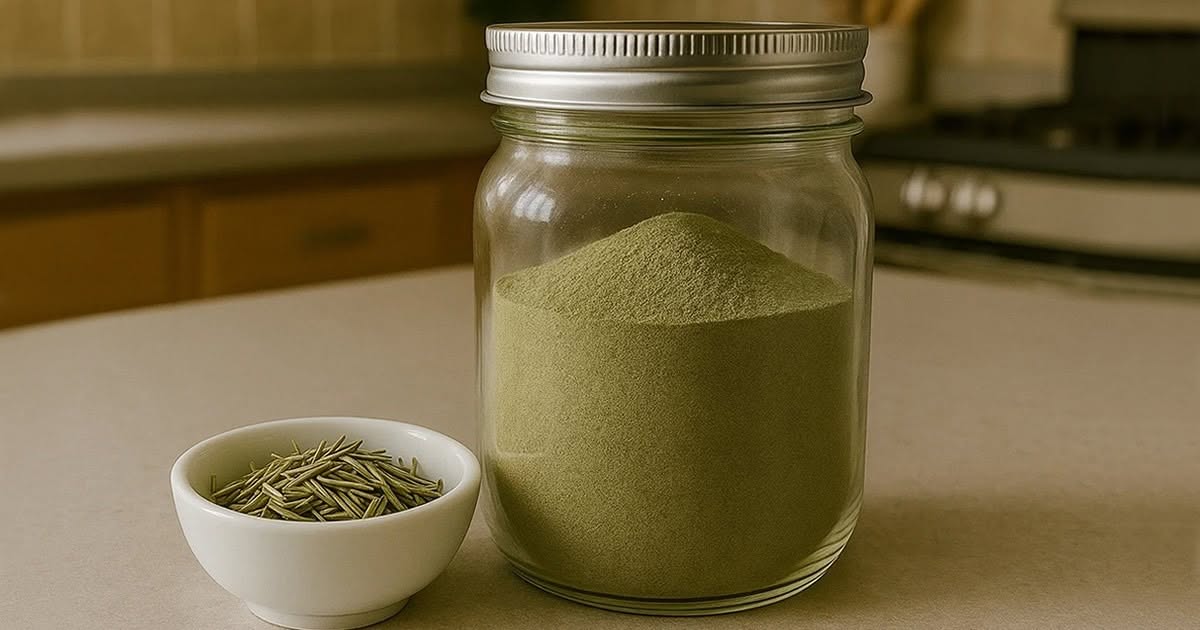
How to Make Tasty Rosemary Powder: Packed With Flavor
Rosemary powder is a simple yet valuable ingredient. Just a small amount can give dishes a bold aroma and distinctive Mediterranean flavor.
Making rosemary powder at home is an easy and economical way to preserve this aromatic herb for longer. It also allows you to control the quality of the rosemary and keep a homemade seasoning ready whenever you need it.
Choosing and Preparing the Rosemary
For a fine and aromatic powder, start with high-quality rosemary. Freshly harvested rosemary is ideal,
particularly when the plant is rich in essential oils.
The leaves should be:
Green and fragrant
Free of yellowing
Free of soil residue and excess moisture
Remove the rosemary needles from the sprigs and quickly rinse them under cold water.
Pat the needles thoroughly with a clean cloth or paper towel to remove as much moisture as possible.
Drying: The Crucial Step
Complete drying is essential if you want a fine powder that stores well.
There are several ways to dry rosemary at home.
Air Drying
Spread the rosemary needles
on a tray or wire rack in a dry, well-ventilated place away from direct light.
Depending on the humidity and conditions, the process can take approximately 3–7 days.
Oven Drying
Spread the rosemary needles on a baking sheet lined with parchment paper.
Dry them at a low temperature of approximately 40–50°C (105–120°F) for 1–2 hours. Keeping the oven door slightly ajar can help moisture escape.
Using a Food Dehydrator
A food dehydrator can provide more uniform results in less time.
Generally, drying the rosemary at approximately 40°C (
104°F) for 1–3 hours is sufficient, depending on the amount and the dehydrator.
The most important point is that the rosemary should be completely dry and crumble easily between your fingers before grinding.
Once the rosemary is completely dry, the transformation takes only a few minutes—and this is where the fresh herb becomes a concentrated seasoning you can keep on hand.
Turning Rosemary Into Powder
Once the rosemary needles are completely dry, you can grind them into a fine powder using several different methods.
Coffee Grinder
A clean coffee
grinder works well for making small batches of finely ground rosemary.
Powerful Blender
A strong blender can also grind dried rosemary into powder. Work in small batches for more even results.
Mortar and Pestle
If you prefer a more rustic texture, a mortar and pestle allows you to crush the dried needles manually.
Sift the Rosemary Powder
After grinding, sift the powder to remove any longer pieces or tough fibers.
Return any larger pieces to the grinder and process them again if necessary.
How to Store Homemade Rosemary Powder
Transfer
the finished rosemary powder to a clean, tightly sealed glass jar.
Keep the jar away from direct sunlight, moisture, and excessive heat.
When stored properly, the powder can retain its characteristic aroma for several months.
Always make sure the rosemary was completely dry before storing it. Any remaining moisture can reduce its storage life.
How to Use Rosemary Powder in the Kitchen
Rosemary powder has a more concentrated flavor than whole rosemary leaves, so a small pinch is often enough.
It can be used to season:
Baked potatoes and roasted
dishes
White and red meats
Grilled fish
Bread, focaccia, and breadsticks
Soups and stews
Flavored oils and homemade salts
Because the powder is finely ground, it can distribute rosemary flavor more evenly throughout a dish than larger leaves.
Tips for Better Rosemary Powder
Dry thoroughly: Moisture is the biggest concern when preparing herbs for storage, so make sure the needles are completely dry before grinding.
Grind small batches: Smaller amounts are easier to process into a consistent powder.
Don’t over-grind: Process the rosemary until it reaches the texture you prefer.
Store away from light: A cool, dark cupboard can help preserve the aroma.
Use sparingly: Because ground rosemary is concentrated, start with a small amount and add more if needed.
A Simple Way to Preserve Rosemary
Making rosemary powder at home is a practical way to make the most of this aromatic herb.
Instead of allowing fresh rosemary to go unused, you can dry it, grind it, and store it in a small jar ready for cooking.
The finished powder is versatile enough for everyday meals, from roasted potatoes and
you want the rosemary flavor distributed evenly instead of having large leaves throughout the dish.
Rosemary Powder for Potatoes
One of the easiest ways to use rosemary powder is with roasted or baked potatoes.
Simply season the potatoes with a small amount of rosemary powder along with your preferred salt and other seasonings before cooking.
The rosemary develops a warm, aromatic flavor as the potatoes roast.
Rosemary Powder for Meat and Fish
A small amount of rosemary powder can also be used as part of a seasoning blend for meat
or fish.
Combine it with other herbs and spices according to the recipe, remembering that ground rosemary has a concentrated flavor.
Rosemary Powder in Bread and Focaccia
Rosemary is a classic addition to homemade bread and focaccia.
Adding a small amount of powder to the dough distributes the flavor throughout the bread, while a little extra can be sprinkled over the surface before baking.
Rosemary Powder in Soups and Stews
A pinch of rosemary powder can add an aromatic depth to soups and slow-cooked dishes.
Because the powder disperses easily,
it can be particularly convenient when you don’t want whole herb leaves floating throughout the dish.
Final Thoughts
Making rosemary powder at home requires only a few simple steps: choose fresh rosemary, remove the needles, wash and dry them carefully, dry them completely, grind them, and store the powder in a sealed glass jar.
Whether you use air drying, a low-temperature oven, or a food dehydrator, the key is making sure the rosemary is completely dry before grinding and storing it.
Once prepared, homemade rosemary powder becomes a convenient and
flavorful seasoning for potatoes, meats, fish, bread, focaccia, soups, stews, oils, and many other dishes.
With just a little preparation, you can preserve the bold aroma of rosemary and keep a homemade Mediterranean-inspired seasoning ready whenever you need it.