Introduction
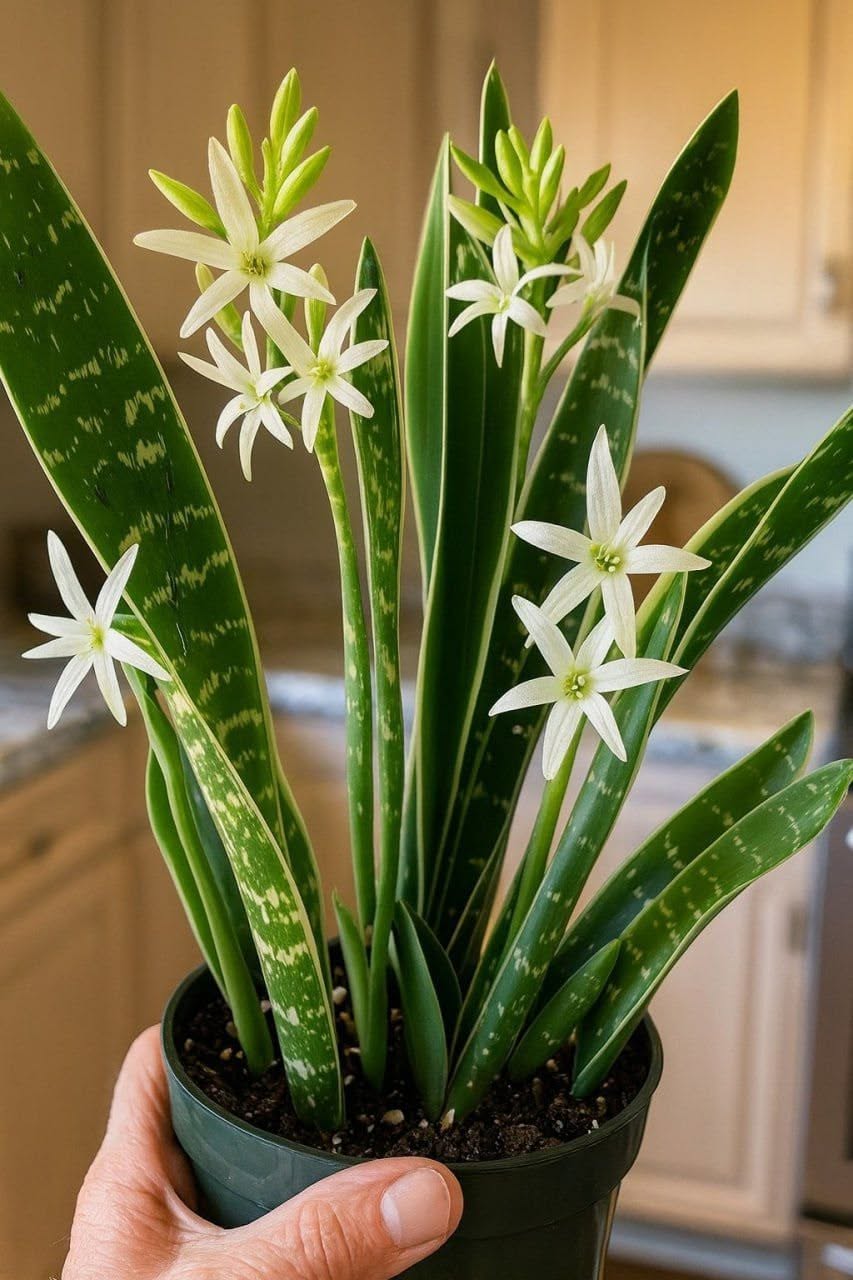
Mother-in-Law’s Tongue (Sansevieria) is a tough, low-maintenance houseplant known for its striking, sword-like leaves and air-purifying qualities. But did you know it can bloom? When conditions are just right, it produces long stalks of tiny white or greenish flowers that smell sweet and jasmine-like, especially at night.
Though rare, with the proper care and stress triggers, you can encourage this stunning plant to flower — and fill your home with a gentle, natural perfume.
 Origin and Cultural Significance
Native to West Africa, Sansevieria trifasciata is revered for its resilience and symbolism. In Feng Shui and African cultures, it’s believed to bring protection and good energy. The rare bloom is seen as a sign of good luck, patience, and strong nurturing.
 What Triggers the Bloom?
In the wild or under ideal conditions, Sansevieria blooms when it feels:
- Slightly stressed but healthy
- In bright, indirect light
- With reduced watering
- In a tight pot
The plant interprets these conditions as a sign to reproduce, leading to a surprise flower stalk — often once a year or once every few years.
 Essential Care to Encourage Flowering
| Care Factor | Recommendation |
|---|---|
| Light | Bright, indirect sunlight (a few hours of filtered sun daily) |
| Watering | Water only when soil is completely dry (every 2–3 weeks) |
| Pot size | Keep slightly root-bound (don’t repot too often) |
| Temperature | 18–27°C (65–80°F); avoid cold drafts |
| Humidity | Low to moderate; this plant loves dry air |
| Fertilizer | Use a balanced houseplant fertilizer (once a month in spring & summer) |
| Soil | Well-draining cactus or succulent mix |
 Optional Boosts (Natural Tricks)
- Stress it slightly: Let the plant dry out a bit more than usual (don’t overdo it!).
- Sunbathe: A few hours of morning sunlight helps trigger flowering.
- Limit repotting: Flowering is more likely when the plant is root-bound.
- Organic potassium fertilizer: Encourages bloom formation.
 Signs Your Snake Plant Might Bloom
- A long flower stalk (up to 2–3 feet) emerges from the center of the leaves.
- Tiny, white/cream-colored budsbegin to open.
- Strong, sweet scent, especially in the evening or at night.
- Flowers may release sticky nectar, which is normal.
 Description of the Bloom
The flowers are:
- Long and tubular
- White or pale green
- Grow in clusters along a central spike
- Fragrant, especially at night (similar to jasmine or hyacinth)
Note: Blooming does not damage the plant. After flowering, the stalk dries up and can be cut off.
 Conclusion
Getting a Mother-in-Law’s Tongue to bloom is rare, but not impossible. With a bit of patience, the right light, minimal watering, and a slight bit of stress, your Snake Plant may reward you with delicate flowers and a home-filling fragrance.
 Recommendation
Place your plant in a bright room, water sparingly, and give it time. Don’t chase the bloom too hard — instead, focus on healthy care. When it does bloom, you’ll enjoy one of the most satisfying surprises in the plant world.
 Embracing Healthful Indulgence
Let your home be filled with the natural perfume of a well-loved plant. The rare blooming of the Mother-in-Law’s Tongue is a reminder that patience, balance, and care can result in unexpected beauty. It’s a healthful indulgence: air purification, minimalist elegance, and — on rare, magical days — sweet fragrance from nature herself.