gum irritation.
A dental professional can help determine which option is appropriate for your teeth.
13. How White Can Your Teeth Actually Get?
One of the most important things to understand is that healthy teeth don’t have to look perfectly white.
Whitening treatments can make teeth lighter, but there is a natural limit to how much your tooth color can change.
The final result depends on factors such as your original tooth shade, the cause of discoloration, enamel characteristics, and the type of whitening treatment used.
When Should You See
a Dentist?
Yellow teeth are not always a sign of a serious problem.
However, you should consider seeing a dentist if:
- The discoloration appeared suddenly.
- One tooth becomes noticeably darker than the others.
- You have tooth pain or sensitivity.
- You notice holes, cracks, or visible damage.
- Your gums bleed frequently.
- You have significant tartar buildup.
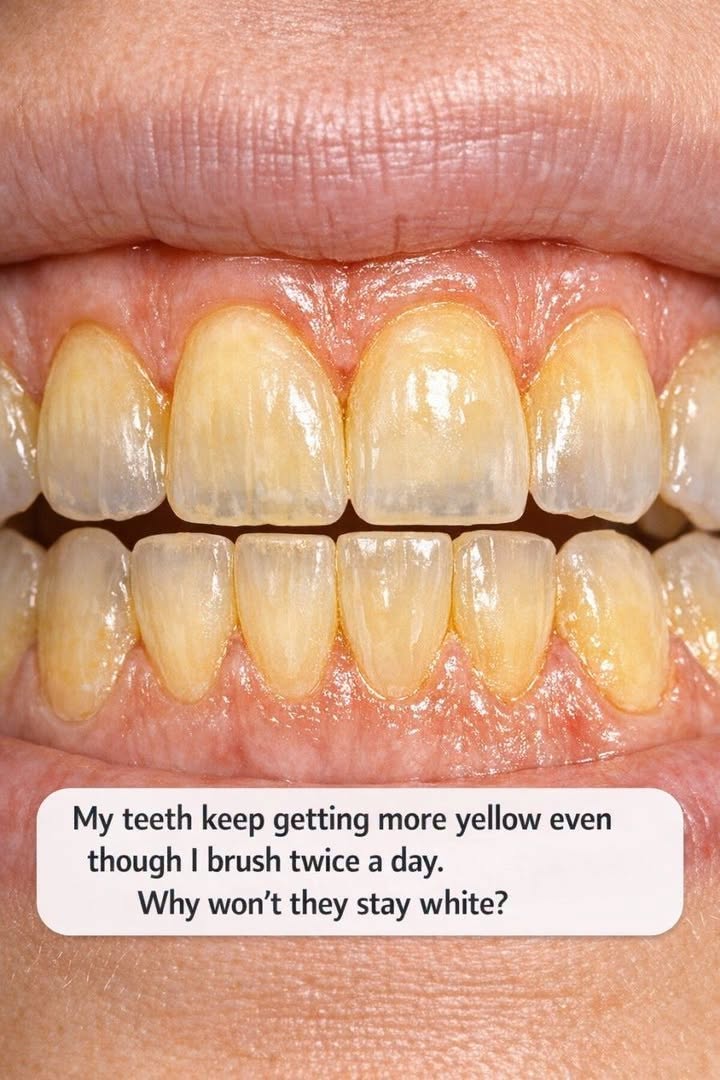
- Your teeth continue changing color despite good oral hygiene.
A dentist can determine whether the discoloration is caused by surface stains, tartar, enamel changes, decay, trauma, medication, or another condition.
The Bottom Line
Brushing twice