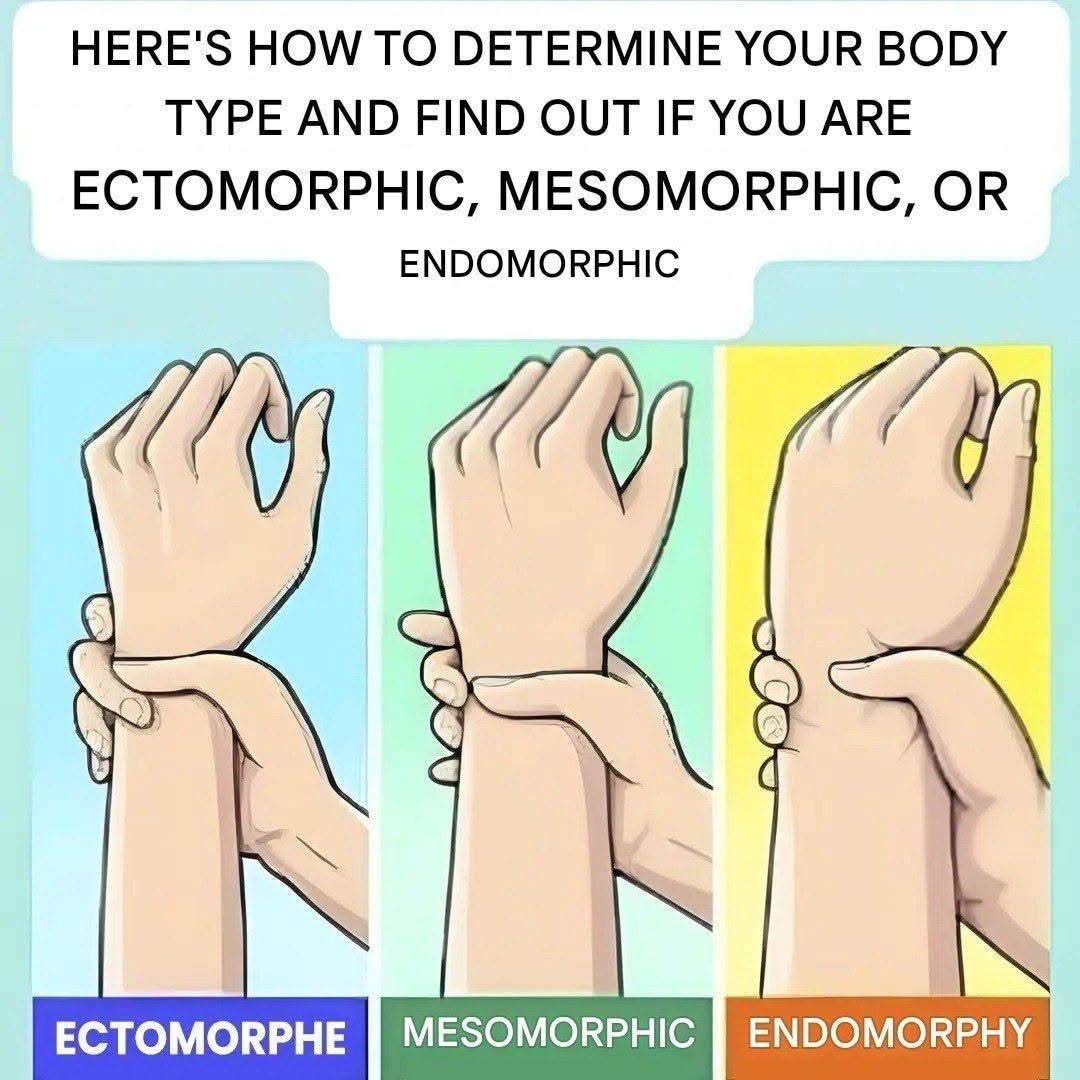
Have you ever wondered why some people gain muscle easily, others stay naturally slim, and some tend to gain weight faster—even when eating similarly?
The answer is often linked to what is commonly called body types. While this concept is widely used in fitness, it’s important to know it’s a simplified model, not a strict scientific classification. Still, it can be helpful for understanding how different bodies respond to diet and exercise.
Let’s break down the three most popular body types and how you can train smarter based on your natural tendencies.
1. Ectomorph – The Naturally Slim Build
Ectomorph body type describes people who are naturally lean with a fast metabolism.
Common traits:
Slim frame and narrow shoulders
Hard to gain weight or muscle
Fast metabolism
Low body fat
Fitness strategy:
Focus on strength training (heavy weights, low reps)
Eat calorie-dense, nutritious foods
Prioritize protein and carbs for muscle gain
Avoid excessive cardio
Key idea:
Ectomorphs need consistent eating and progressive training to build muscle over time.
2. Mesomorph – The Naturally Athletic Build
Mesomorph body type refers to people who tend to build muscle easily and have a balanced physique.
Common traits:
Naturally muscular or athletic appearance
Gains muscle easily
Moderate metabolism
Responsive to training
Fitness strategy:
Mix strength training and cardio
Maintain balanced nutrition
Focus on progressive overload
Adjust calories based on goals (bulk or cut)
Key idea:
Mesomorphs often respond quickly to training, but consistency is still essential.
3. Endomorph – The Naturally Curvier Build
Endomorph body type describes individuals who tend to store more body fat and may gain weight easily.
Common traits:
Softer, rounder body shape
Gains weight easily
Slower metabolism
May struggle with fat loss
Fitness strategy:
Focus on regular cardio and strength training
Eat a controlled, balanced calorie diet
Prioritize protein and fiber
Reduce processed foods and excess sugar
Key idea:
Endomorphs benefit most from consistency and calorie awareness.
Important truth: Body types are not fixed labels
Modern science in Exercise physiology suggests that real human bodies are far more complex than just three categories.
Most people are actually a mix of all three types, and factors like:
diet
sleep
stress
training habits
hormones
…play a much bigger role than body type alone.
4. What matters more than your body type
Instead of focusing only on classification, focus on:
progressive training
consistent nutrition
adequate rest
long-term habits
These are the real drivers of body transformation.
5. How to “make the most” of your body type
No matter your genetics:
Ectomorph → build muscle with calorie surplus
Mesomorph → maintain balance and optimize goals
Endomorph → focus on fat management and consistency
But the truth is simple: discipline beats body type every time.
Final Thought
Body types can be a helpful guide, but they don’t define your limits. Your body is adaptable, and with the right training and nutrition, anyone can improve strength, shape, and health.
Instead of asking “What body type am I?” the better question is:
“What habits will help me become stronger, healthier, and more confident?”
Because your results are not written in your body type—they are built by your daily choices.