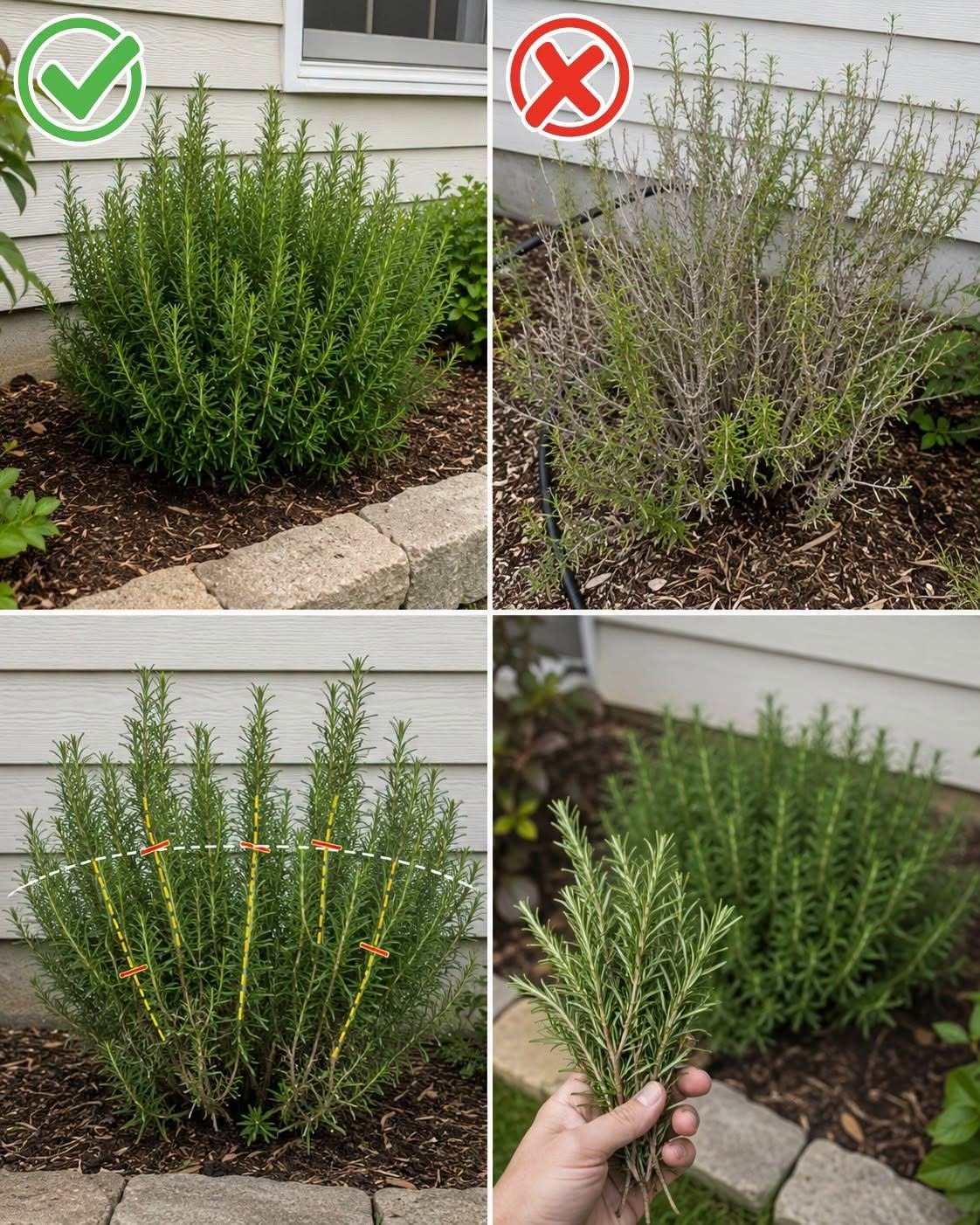
Rosemary can grow from a small herb into a surprisingly large, woody shrub.
By the end of summer, plants that looked compact in spring may have long wandering stems, faded flowers, uneven growth, and branches spilling over pathways or neighboring plants.
Naturally, September and fall cleanup season make many gardeners reach for their pruning shears.
But rosemary isn’t a perennial you should simply cut to the ground.
In fact, one aggressive fall pruning can leave a healthy rosemary plant struggling through winter.
The secret is knowing the difference between the light cleanup rosemary can receive in fall and the more important shaping prune that is usually better saved for spring.
If you want a dense, bushy rosemary plant rather than a woody, bare-centered shrub, here’s exactly when—and how—to trim it.
Fall Rosemary Pruning: What You Should Do First
Let’s start with the question many gardeners have as summer ends:
Should rosemary be cut back in fall?
Yes—but usually only lightly.
Early fall can be a useful time to tidy rosemary after its summer growth, especially in climates where the plant remains outdoors through winter.
However, this isn’t normally the time for drastic renovation.
The goal of fall pruning is simple:
Clean it up without encouraging lots of tender new growth immediately before cold weather.
1. Remove Dead, Damaged and Diseased Stems
Begin with the easiest cuts.
Inspect the entire plant and remove branches that are:
Completely dead
Broken
Damaged
Diseased
Rubbing badly against neighboring branches
Dead rosemary stems are usually dry, brittle, and brown.
If you’re uncertain whether a branch is alive, gently scratch a tiny portion of the outer bark.
Green tissue underneath indicates living wood.
Dry brown tissue suggests that section is dead.
Cut dead material back until you reach healthy tissue.
2. Give Long Stems a Light Trim
Rosemary often becomes uneven by late summer.
Some branches may extend far beyond the main plant, creating a loose or sprawling appearance.
You can shorten those stems in early fall.
But keep the cuts conservative.
A useful rule is to remove no more than roughly one-third of the green leafy growth at one time, and less is often safer when winter is approaching.
You’re shaping the plant—not rebuilding it.
3. Don’t Cut Deep Into Bare Woody Stems
This is probably the most important rosemary pruning rule.
Look closely at an older rosemary plant and you’ll notice two distinct kinds of growth:
Green, leafy growth toward the outside.
and
Brown, woody stems toward the center and base.
Whenever possible, make pruning cuts where green foliage remains below the cut.
Rosemary doesn’t reliably regenerate from old, completely bare wood.
If you cut a mature branch back to a leafless brown stump, that branch may never produce new shoots.
This is why neglected rosemary can be difficult to renovate all at once.
Regular light pruning while the plant is young is far safer.
4. Don’t Prune Heavily Right Before Frost
Timing matters.
Pruning can stimulate new growth.
Fresh rosemary shoots are much softer and more vulnerable to cold than mature stems.
If you perform a hard pruning shortly before freezing weather arrives, the plant may produce tender growth that doesn’t have enough time to harden before winter.
In areas with cold winters, finish any meaningful fall trimming well before regular frost is expected.
As the season gets colder, limit yourself mainly to removing damaged or dead material.
5. Harvest Instead of Wasting the Cuttings
One advantage of pruning rosemary is that much of what you remove can go straight into the kitchen.
Choose healthy, fragrant green stems.