

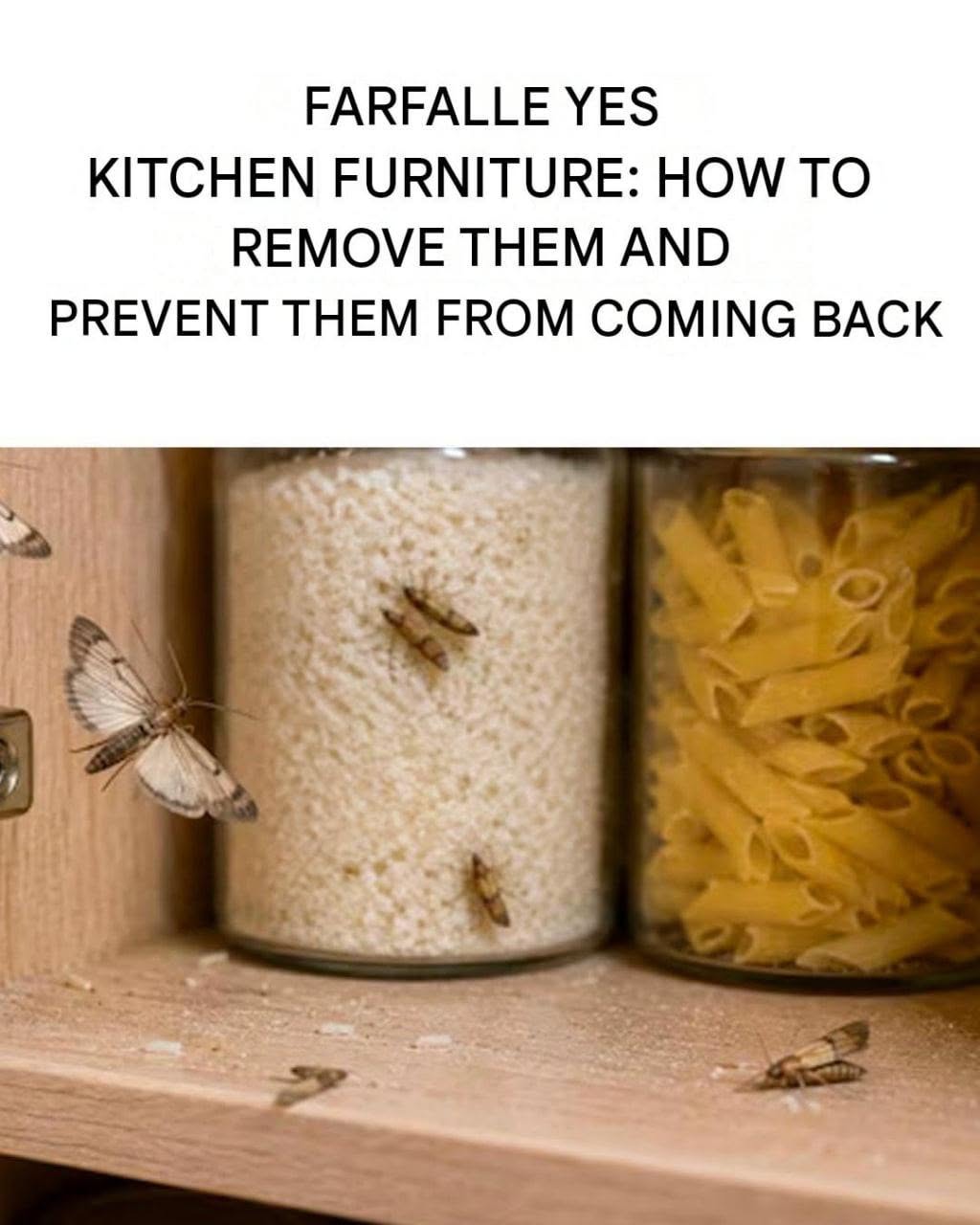
Have you found tiny moths in your kitchen cabinets? Here’s how to recognize food moths, eliminate an infestation, and prevent them from coming back.
Edited by Editorial Staff
Finding small moths in your kitchen cabinets is a warning sign you shouldn’t ignore. These are often food moths, insects that can infest pasta, flour, rice, cereals, biscuits, dried fruit, and other foods stored in the pantry.
Seeing one flying moth doesn’t necessarily mean the infestation has just begun. The larvae can remain hidden inside packages for a long time before the adult insects appear.
Where Do Pantry Moths Come From?
Food moths can enter your home through already-infested food. Their eggs and larvae are very small and may be found inside or around packaging, making them difficult to spot when you buy a product.
Once they enter the pantry, they can move from one product to another and lay new eggs.
For this reason, finding a moth near your kitchen cabinets is a good reason to carefully inspect the entire pantry.
How to Tell If You Have an Infestation
The first step is to check dry foods carefully.
Pay particular attention to:
- Flour
- Pasta
- Rice
- Cereals
- Biscuits and cookies
- Dried legumes
- Dried fruit
- Spices
- Pet food
In addition to larvae, you may notice cobweb-like filaments, small lumps, cocoons, or unusual residues inside the packages.
Even apparently unopened packages can be contaminated, so it’s important to inspect foods that have been stored for a long time.
The First Thing to Do: Completely Empty the Cabinets
To eliminate moths, it isn’t enough to kill the adults you see flying around.
Completely empty the cabinet or pantry and inspect all the products one by one.
Obviously infested food should be discarded. Seal it in a bag before taking it out of the kitchen to prevent larvae or eggs from spreading, and avoid leaving contaminated food in an indoor trash can.
How to Clean Kitchen Cabinets
After removing all the food, thoroughly clean the shelves, corners, cracks, and holes around adjustable shelving.
A vacuum cleaner can help remove food debris, larvae, and cocoons hidden in hard-to-reach areas.
You can then wash the surfaces with water and a detergent suitable for the cabinet material. Finally, make sure everything is completely dry before putting food back.
Beware of Opened Packages
Once cleaning is complete, avoid leaving pasta, flour, and other dry foods in their original opened packages.
Transferring them to airtight containers helps reduce the risk of an infestation spreading from one product to another.
Make sure the containers are clean and completely dry before using them.
Pheromone Traps Can Help
Pheromone traps specifically designed for food moths can be useful for monitoring adult moth activity and reducing their numbers.
However, they shouldn’t be considered a sufficient solution when an infestation is already established. The key is still to identify and eliminate the source: contaminated food and any eggs, larvae, or residues remaining in the pantry.
What Not to Do
One of the most common mistakes is spraying insecticides directly in areas where food is stored.
It’s best to avoid using chemicals on shelves containing food unless the product is specifically labeled for that use and the instructions are followed carefully. Mechanical cleaning and removing infested products should be the first steps.
Continuing to store suspicious packages can also allow the infestation to return.
How to Prevent Moths From Coming Back
Once you’ve eliminated the infestation, a few simple habits can help prevent it from returning.
Check dry foods periodically, especially products that have been stored for a long time. This makes it easier to spot signs of contamination early.
Keep your pantry clean, store dry goods in airtight containers, and avoid stockpiling large quantities of food. These measures make it harder for moths to spread unnoticed.
If moths continue to appear despite thorough cleaning, there may still be a hidden source. Recheck all dry food products and inspect hard-to-reach areas of the cabinets.
The key point is simple: you can’t solve the problem by eliminating adult moths alone. To truly get rid of an infestation, you need to find and remove the infested product, thoroughly clean the pantry, and store dry foods in tightly sealed containers.