

Discovering the Stinkhorn: A Quiet Wonder Hidden in Plain Sight
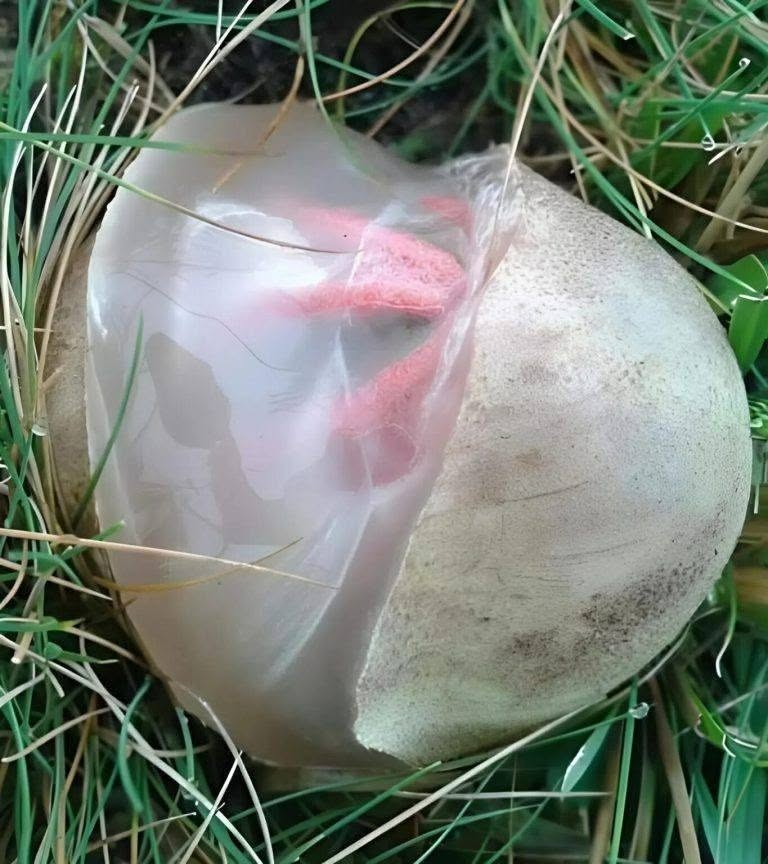
Finding a stinkhorn fungus in its egg stage is like stumbling upon a secret waiting to unfold. It is one of those quiet wonders of the natural world that reminds us just how strange and beautiful the forest floor can be. What appears to be nothing more than a pale, half buried lump in the leaf litter is, in fact, a fully formed organism compressed into a tiny package, simply waiting for the right moment to reveal itself.
The Egg Stage: Nature’s Patient Mystery
The egg you have discovered is the immature form of the stinkhorn. It can rest quietly in the soil for days or even weeks, resembling a small puffball or a forgotten Easter egg tucked among the leaves. Its outer layer, known as the peridium, is leathery and gelatinous to the touch, somewhat like a soft rubbery shell. Beneath that unassuming casing, the entire mature fungus already exists in miniature, fully formed and tightly compressed, awaiting the precise combination of warmth and moisture that will trigger its dramatic emergence.
The Great Unfurling: Growth at Astonishing Speed
For Complete Cooking STEPS Please Head On Over To Next Page Or Open button (>) and don’t forget to SHARE with your Facebook friends
ADVERTIS
When conditions align, the stinkhorn hatches, and what follows is one of the fastest transformations in the entire fungal kingdom. In the span of just one to two hours, the compressed structure inside the egg expands dramatically, sometimes growing several inches in height. It is a breathtakingly rapid metamorphosis, rivaling the speed of time lapse photography played in real life. If you are fortunate enough to witness it, the experience feels almost impossible, as though the earth itself is exhaling a new form into existence.
The Smelly Strategy: Evolution at Its Most Ingenious
Once fully emerged, the stinkhorn earns both its name and its notorious reputation. The fungus produces a sticky, dark green or olive brown slime called the gleba on its surface, and this slime carries the reproductive spores. To ensure those spores reach new territory, the stinkhorn employs a remarkably effective strategy. It emits a powerful odor that, to human noses, resembles rotting meat or something decidedly unpleasant. However, to flies and other carrion loving insects, that same scent is an irresistible dinner bell.
The insects land, feed on the slime, and unknowingly collect spores on their legs and bodies before flying off to disperse them across the landscape. It is a brilliant evolutionary arrangement, one that guarantees the stinkhorn’s survival without any dependence on wind or rain for reproduction.
A Gentle Word of Caution
While stinkhorns are not poisonous to the touch, their slime can be irritating to sensitive skin, and the pungent smell tends to linger stubbornly on bare hands. It is wisest to admire them from a respectful distance and allow them to complete their work undisturbed. In a garden setting, they are entirely harmless to plants and actually contribute to breaking down organic matter in the soil. If you prefer to remove them, simply wear gloves, place the fungus in a sealed bag, and dispose of it in the trash rather than the compost bin, where it might continue to spread its spores.
A Final Reflection
There is something profoundly moving about how nature transforms decay into purpose and foul odors into a grand strategy for survival. The stinkhorn may not be the most glamorous organism in the forest, but it is undeniably one of the most extraordinary. It stands as a quiet reminder that even the strange, the overlooked, and the seemingly unpleasant have a role to play, carrying within them a wisdom that unfolds slowly, patiently, and with remarkable ingenuity.
ADVERTISEMENT