Funny
That Grey Fuzz in Your Hairbrush Is More Disgusting Than You Think
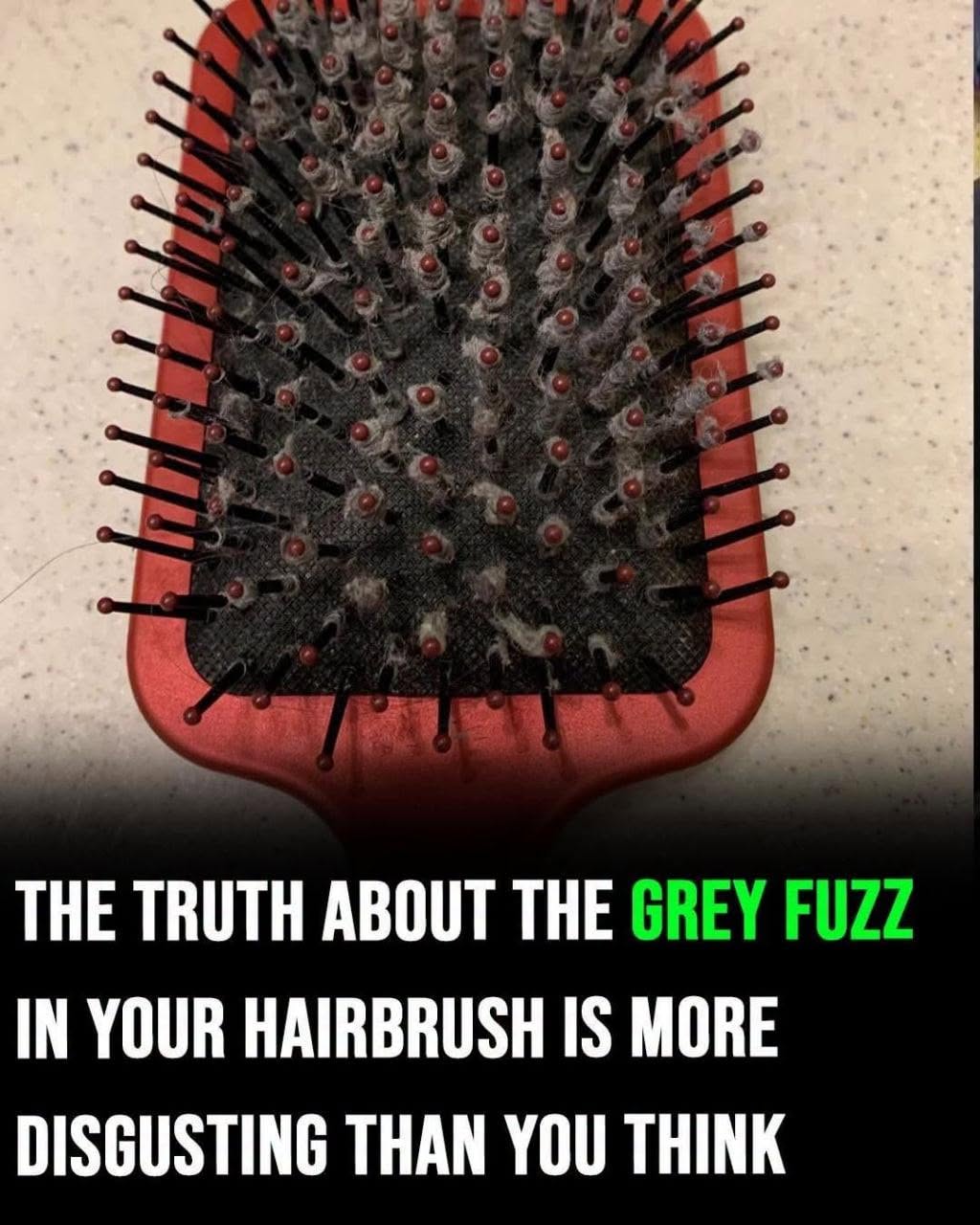
Have you ever looked at your hairbrush and wondered what that strange grey fuzz trapped between the bristles actually is? You might assume it’s nothing more than ordinary dust or lint. The reality, however, is a little less pleasant.
That fluffy grey buildup is usually a mixture of shed hair, dead skin cells, natural scalp oils, airborne dust, and residue from haircare products. Over time, these materials combine to form the familiar clumps that collect around the
base of your hairbrush.
Styling products can make the problem worse by helping these particles stick together. Hair gel, mousse, hairspray, pomade, dry shampoo, and leave-in conditioners can all leave residue that gradually accumulates between the bristles.
Everyday brushing also traps loose hairs and tiny particles from your scalp and surroundings. When these mix with product residue and natural oils, the result is the grey fuzz many people discover when cleaning their brushes.
In other words, that seemingly harmless fluff is a collection of everyday materials that have accumulated through
regular use.
Why Does the Grey Fuzz Build Up So Quickly?
Every time you brush your hair, loose strands can become tangled around the bristles. At the same time, tiny particles of dead skin, natural oils, and haircare products may collect on the brush.
With repeated use, these materials become intertwined, forming a thicker layer of residue that can be difficult to remove without cleaning.
If you brush your hair daily or regularly use styling products, you may notice visible buildup within a week or two. The exact timing depends
on how often you use your brush, your haircare routine, and the type of brush you own.
Although grey fuzz is generally not a cause for concern, leaving a hairbrush uncleaned for long periods allows oils, product residue, and other debris to accumulate. Microorganisms may also be present, as they can be on many frequently used personal-care items.
Why Cleaning Your Hairbrush Matters
Removing visible fuzz isn’t just about keeping your hairbrush looking clean. Regular cleaning helps remove excess oils, old product residue, loose hair, and other debris that could
otherwise transfer back onto your hair and scalp.
Like other personal grooming tools, a hairbrush can harbour bacteria and yeast. Their presence doesn’t automatically mean the brush will cause a problem, but cleaning it regularly is a sensible hygiene practice, especially if you have an irritated scalp or share grooming tools with others.
Excessive residue can also make brushing less comfortable by increasing tangling and causing the bristles to drag through your hair. Rough brushing, particularly when your hair is wet or fragile, can contribute to breakage.
Keeping your brush
clean is therefore a simple way to maintain good haircare hygiene and help your brush work as it should.
How Often Should You Clean Your Hairbrush?
The ideal cleaning schedule depends on how frequently you use your brush and how much styling product you apply.
As a general guide:
Daily brush users: Remove trapped hair regularly and wash the brush about once a week, especially if you use styling products.
Occasional users: Cleaning every two to three weeks may be sufficient if the brush remains relatively clean.
Heavy styling-product users:
them carefully to avoid damaging the bristles or the brush’s base.
Step 2: Prepare a Gentle Cleaning Solution
For a washable plastic brush, mix warm water with a small amount of shampoo. Avoid very hot water, which can damage certain brushes.
If your brush is made of wood, has a padded base, or contains natural bristles, check the manufacturer’s cleaning instructions before using water.
Step 3: Scrub Away the Residue
Use an old, clean toothbrush to gently scrub between the bristles and around the base, where oils and product buildup
tend to collect.
Work carefully to remove the residue without bending or damaging the bristles.
Step 4: Rinse Thoroughly
Rinse away the loosened debris and shampoo, taking care not to soak parts of the brush that may be sensitive to moisture.
Wooden brushes and those with padded bases generally shouldn’t be submerged unless the manufacturer specifically says it’s safe to do so. Excess moisture can damage certain materials.
Step 5: Let It Dry Completely
Shake off excess water and leave the brush to air-dry, ideally with the bristles facing downward
where practical. Allow it to dry completely before using it again.
For routine cleaning, you generally don’t need baking soda or other special ingredients. A little shampoo and warm water are sufficient for most washable brushes.
The Bottom Line
That grey fuzz in your hairbrush may look unpleasant, but it’s usually the predictable result of everyday grooming. Shed hair, dead skin cells, scalp oils, dust, and styling-product residue gradually collect between the bristles until the buildup becomes visible.
The good news is that keeping it under control is easy. Remove
loose hair regularly, clean your brush according to its material and the manufacturer’s instructions, and give it a thorough wash whenever residue starts to appear.
It’s a small task that takes only a few minutes, but it can help keep your haircare routine cleaner and more comfortable.
So, the next time you spot that mysterious grey fluff, don’t panic. Just take it as a reminder that your hairbrush deserves a little attention, too.
You’ve just read Grey Fuzz in Your Hairbrush. Why not read Ever Apologise to a Doorframe next?