

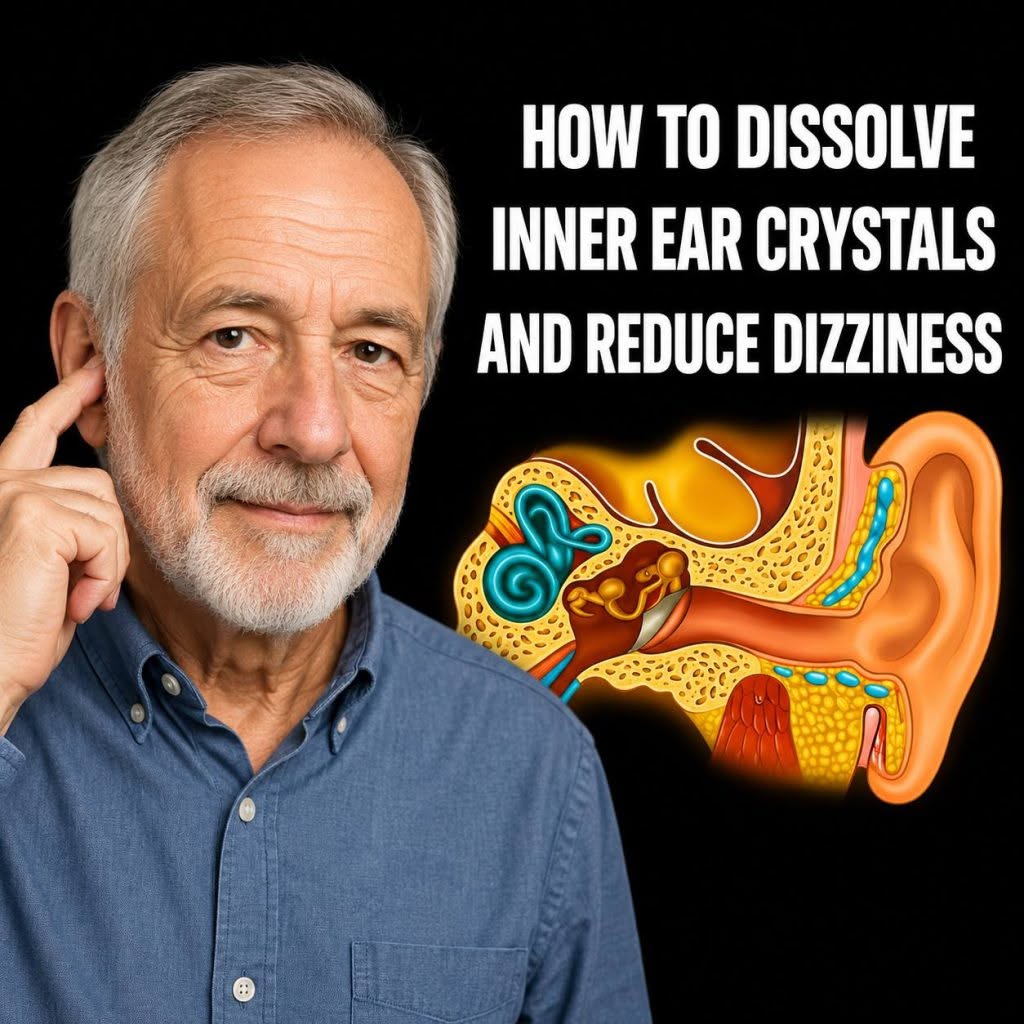
You are standing peacefully when suddenly everything starts spinning. This sensation of dizziness, as unexpected as it is uncomfortable, affects many people.
In some cases, the cause may be related to tiny calcium carbonate crystals inside the inner ear that have moved out of their normal position. These small structures play an important role in helping the body maintain balance.
The good news is that understanding how this process works can help you recognize the symptoms and learn about approaches that may help reduce these sensations.
What Happens in Our Inner Ear?
Inside the ear, more specifically in a structure called the vestibule, are tiny calcium carbonate crystals known as otoliths.
Their role is to help the body detect movement and maintain balance. They work together with sensory hair cells, acting like small position sensors that send information to the brain.
However, sometimes these crystals can move into areas
where they do not normally belong. When this happens, the brain may receive confusing signals about movement and position.
This can create the sensation that the room is spinning even when everything around you is still. This condition is known as benign paroxysmal positional vertigo (BPPV).
Understanding why these tiny crystals move can reveal what is really happening when sudden dizziness appears.
Why Do These Crystals Move?
Several factors may contribute to the displacement of inner ear crystals:
Head trauma: A fall, impact, or injury may sometimes disturb the position of the crystals.
Aging: As we get older, these structures may become more fragile and more likely to move.
Certain ear infections: Some conditions affecting the inner ear can interfere with the balance system.
Medications: Certain medicines may influence calcium metabolism or balance-related processes.
Calcium or vitamin D imbalance: Nutrition and mineral balance may also play a role in maintaining
healthy inner ear function.
The Link Between Vitamin D, Calcium, and Dizziness
Vitamin D and calcium are important nutrients involved in maintaining bone health and many body functions.
Some research has explored a possible relationship between vitamin D levels and recurrent BPPV, particularly because calcium metabolism may influence how inner ear crystals are maintained.
People with conditions affecting bone health, such as osteoporosis, may have different calcium balance patterns, which researchers have studied in relation to vertigo risk.
Maintaining adequate vitamin D levels, along with a balanced intake of nutrients such as calcium, magnesium, and vitamin K, supports overall health.
However, high-dose vitamin D supplements should only be taken under medical guidance, as excessive intake can cause health problems.
Simple Exercises That May Help Reposition the Crystals
In addition to medical evaluation, certain physical movements are often used to help manage BPPV.
One of the best-known techniques is the Epley
maneuver, a series of controlled head and body movements designed to help guide displaced crystals back toward their normal position.
The exercise involves changing head positions at specific angles and staying still for short periods before moving again.
Although many people perform these movements successfully, learning the correct technique from a healthcare professional can help ensure they are done safely, especially if symptoms are severe or the diagnosis is uncertain.
A small disturbance inside the ear can create a powerful sensation, but the right approach can help many people regain their sense of balance.
A Tiny Imbalance With Real Effects
Sometimes, something extremely small can have a noticeable impact on how we feel.
Inner ear crystals are microscopic, but when they move into the wrong place, they can interfere with the signals responsible for balance and orientation.
Recognizing the possible causes of vertigo, understanding available exercises, and discussing recurring symptoms
with a healthcare professional can help you find the most appropriate solution.
If dizziness is sudden, severe, repeated, or accompanied by symptoms such as weakness, difficulty speaking, chest pain, severe headache, or loss of consciousness, medical attention should be sought promptly.