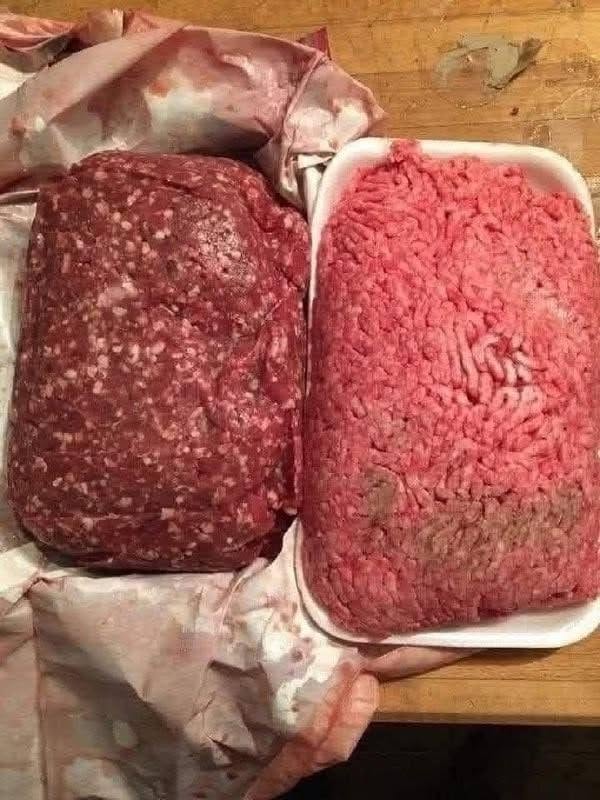
It is natural to feel uneasy when you spot a package of ground beef with two distinct shades of color—a bright, pink center surrounded by a dull, greyish-brown rim. Before you worry that the meat has spoiled, it is important to understand that this color shift is usually caused by oxygen exposure rather than spoilage, a process that also explains some of the differences between beef sold in supermarkets and that sold by local butchers.
The Science Behind Meat Color
The color of ground beef comes from a protein called myoglobin, which is responsible for storing oxygen in muscle tissue. When myoglobin is exposed to oxygen, it turns into oxymyoglobin, which produces the bright, cherry-red color that most people associate with fresh meat. When meat is packaged, the outer layer is often exposed to oxygen, giving it that vibrant hue. However, the meat that is pressed against the packaging or left in a low-oxygen environment will remain in its deoxymyoglobin state, which appears brown or grey.
This is why many packages of ground beef have a brownish interior with a pink exterior. It is a natural chemical reaction, not a sign of rot. The meat closest to the surface is oxygenated, while the meat deeper inside or pressed against the plastic is not.
How This Differs in Supermarket Versus Butcher Meat
In many supermarkets, ground beef is produced in large batches and often treated with gases like carbon monoxide or nitrogen to preserve its red color for a longer period. This is why ground beef from a butcher or a local farm may sometimes appear less vibrant or have a different texture. Beef from a butcher that is ground fresh may also have a coarser texture and a more natural color, which some consumers interpret as being more “honest” or “pure.”
As one post noted, high-quality ground beef from a trusted producer often has a fresh, pink appearance and does not shrink when cooked. This can be an indicator of a higher fat content or a fresher grind. However, it is important to remember that color alone is not a perfect indicator of quality or freshness. Meat that has been exposed to air for too long may also have a pleasant pink color but a slimy texture or off-putting smell.
What Actually Determines Meat Safety
To assess whether ground beef is safe to eat, you should rely on sensory cues beyond color:
Smell: Fresh ground beef should have a mild, slightly metallic scent. If it smells sour, ammonia-like, or unpleasant, it should be discarded.
Texture: The meat should be firm and slightly moist, not sticky or slimy. If it feels tacky and leaves a residue on your fingers, it is best to avoid it.
Temperature: Ground beef should be stored at 40°F (4°C) or below and cooked to an internal temperature of 160°F (71°C) to ensure it is safe to consume.
Expiration Date: Always check the sell-by date and use the meat within one to two days of purchase, or freeze it if you do not plan to cook it immediately.
Handling Ground Beef Safely
Once you have determined that your ground beef is safe, proper handling is essential. Keep it refrigerated and use it within a couple of days. If you are not planning to cook it right away, you can freeze it for longer storage. When cooking, ensure the meat is cooked thoroughly to kill any potential bacteria.
The Bottom Line
The color variation in ground beef is a normal, natural process that occurs when myoglobin is exposed to oxygen. It does not indicate that the meat is spoiled or unsafe to eat. As long as the meat passes the smell and texture tests and has been stored properly, it is perfectly safe to cook and enjoy. While certain differences exist between supermarket meat and butcher meat in terms of processing and appearance, the most important factors for safety are always temperature control, hygiene, and proper cooking.