
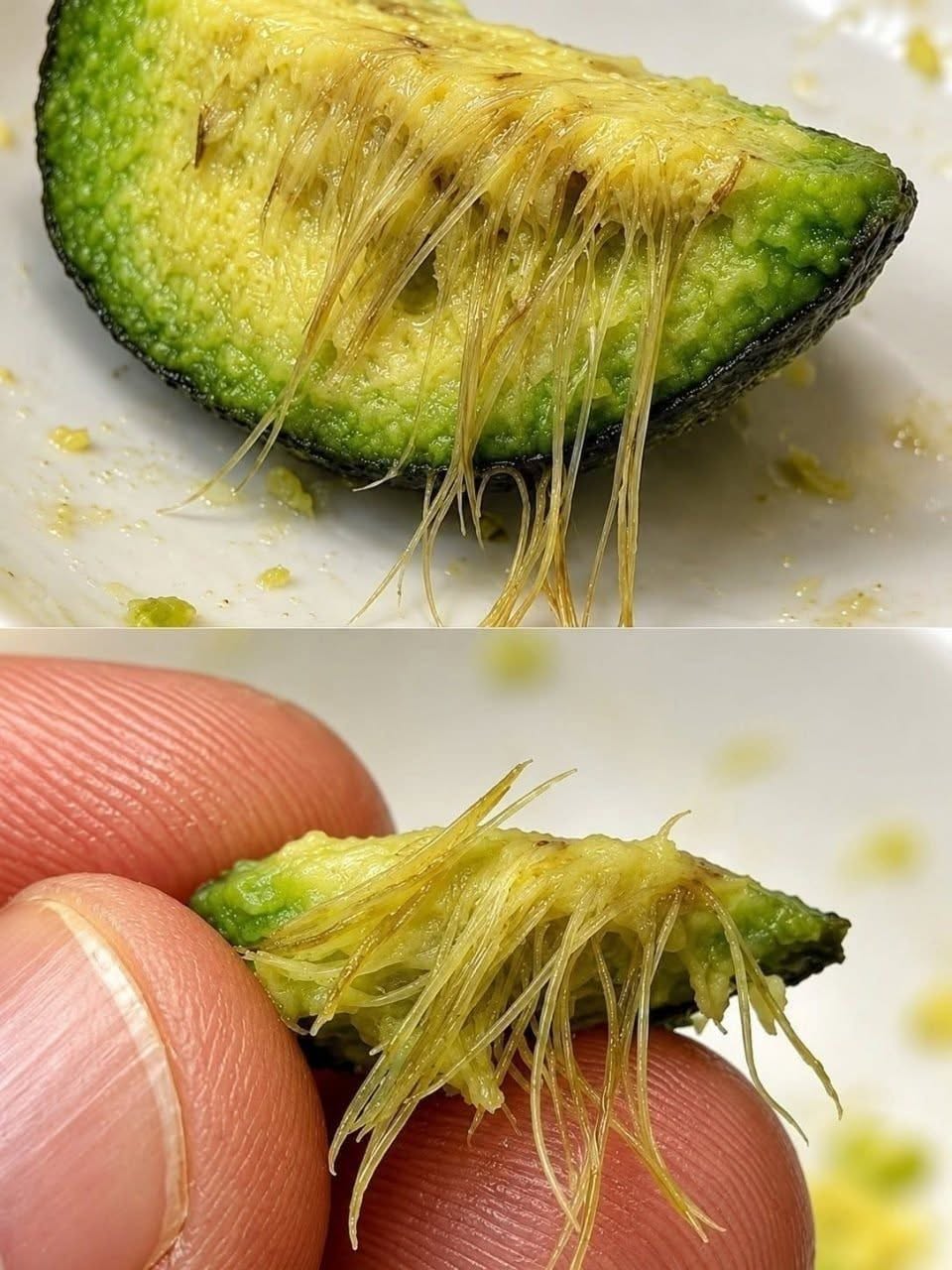
You cut open an avocado expecting smooth, creamy green flesh—and instead discover thin brown, tan, or yellowish strings running through the fruit.
It can look strange enough to make you wonder whether the avocado is spoiled, unsafe to eat, or simply poor quality.
The reassuring answer is that stringy fibers inside an avocado are usually not a sign of dangerous spoilage. In most cases, they are part of the fruit’s natural internal structure.
Understanding what those fibers are, why they sometimes become more noticeable, and how to recognize true signs of spoilage can help you decide whether the avocado belongs in your recipe or in the trash.
What Are the Strings Inside an Avocado?
The thin strands you sometimes see inside an avocado are known as vascular bundles.
These bundles form part of the avocado’s natural internal transport system.
While the fruit develops on the tree, vascular tissue helps move water and nutrients throughout the growing avocado.
Every avocado contains this tissue.
In a perfectly smooth avocado, the fibers are usually so fine and tender that you barely notice them.
Sometimes, however, those bundles become thicker, tougher, darker, or simply much more visible.
That is when the flesh develops the stringy texture that can make an otherwise normal avocado look suspicious.
Why Are Some Avocados More Stringy Than Others?
Several factors can influence how noticeable the vascular bundles become.
1. The Avocado May Have Come From a Younger Tree
Fruit characteristics can change as avocado trees mature.
Avocados from younger trees may sometimes develop more prominent vascular fibers.
The bundles can be thicker and slightly tougher, making them much easier to see when the fruit is sliced open.
This does not necessarily mean there is anything wrong with the avocado.
It may simply have a less desirable texture.
2. Growing Conditions Can Affect Texture
Avocados are sensitive to environmental conditions while developing.
Temperature fluctuations, water availability, and other growing stresses can influence the texture of the fruit.
Under certain conditions, the vascular tissue may become tougher or more pronounced.
Two avocados of the same variety can therefore look very different inside even if they appear nearly identical on the outside.
3. Storage Conditions May Play a Role
Avocados continue to change after harvesting.
Temperature during transport, storage, and ripening can affect their final texture.
Improper storage can contribute to uneven ripening, internal discoloration, or firmer fibers.
4. The Avocado May Be Overripe
As an avocado becomes very ripe, its creamy flesh gradually softens and begins to break down.
The vascular fibers may not soften at the same rate.
As the surrounding flesh becomes softer, the strings suddenly stand out much more clearly.
This is one reason an avocado can look perfectly ordinary from the outside yet appear noticeably stringy when opened.
Are Stringy Avocados Safe to Eat?
In general, the presence of visible vascular fibers alone does not make an avocado unsafe.
If the flesh otherwise smells fresh, has a reasonably normal consistency, and shows no signs of mold or severe decomposition, the strings are usually just a texture issue.
You may find them unpleasant to chew, but they are part of the avocado’s natural tissue.
Can You Remove the Strings?
If only a few fibers are visible, you can often pull them away with the tip of a spoon or knife.
For heavily stringy fruit, removing each strand individually may not be worth the effort.
In that case, using the avocado in a mashed or blended recipe is often easier.
Turn It Into Guacamole
Mashing the avocado thoroughly can make the fibers much less noticeable.
Combine the flesh with ingredients such as:
Fresh lime juice
Salt
Chopped tomato
Onion
Cilantro
Garlic
Chili pepper
Once mashed and mixed, minor stringiness may become almost impossible to notice.
Blend It Into a Smoothie
A high-speed blender can also break down the fibrous texture.
This works particularly well if the avocado is still fresh and flavorful but does not have the smooth consistency you expected.
Blend it with banana, berries, yogurt, milk, or another smoothie base.
Use It in a Creamy Dressing
Stringy but otherwise good avocado can also be blended with lemon or lime juice, herbs, olive oil, and a little water to create a creamy salad dressing.
Use It in Avocado Toast
Mash the avocado firmly with a fork before spreading it onto toast.
The additional ingredients and texture of the bread can make slight stringiness much less noticeable.
When Should You Throw an Avocado Away?
While strings alone are usually harmless, some signs indicate that an avocado has genuinely spoiled.
1. Visible Mold
If you see fuzzy white, green, gray, or black mold, discard the avocado.
Avocados are soft fruits, which means mold can extend deeper into the flesh than what is visible on the surface.
Simply cutting away the moldy section may not reliably remove all affected tissue.
2. A Sour or Rancid Smell
Fresh avocado has a very mild, slightly grassy or nutty aroma.
An unpleasant smell is a stronger warning sign than a few brown fibers.
Discard the fruit if it smells:
Sour
Fermented
Rancid
Strongly musty
Otherwise noticeably unpleasant
3. Extensive Dark Flesh
A small brown patch is not always a problem.
Bruising and oxidation can produce localized discoloration.
However, if most of the flesh has turned very dark brown or black, especially when combined with an unpleasant smell or mushy texture, the avocado is probably past its best.
4. Watery or Slimy Texture
Overripe avocado flesh may become unusually watery, slimy, or excessively mushy.
If the texture seems decomposed rather than simply soft and creamy, it is safer to discard the fruit.
5. Fermented Flavor
If you taste a tiny amount and notice a sour, alcoholic, or fermented flavor, do not continue eating it.
A normal ripe avocado should taste mild, creamy, and slightly nutty
Does Brown Avocado Flesh Always Mean Spoilage?
No.
Avocado flesh turns brown very easily when exposed to oxygen.
This process is called oxidation.
It is similar to what happens when sliced apples or bananas darken after being cut.
What Causes Oxidation?
Once the avocado flesh is exposed to air, enzymes in the fruit react with oxygen and produce brown pigments.
This can happen quickly, especially on cut or mashed avocado.
Oxidation affects appearance more than safety.
A slightly browned surface can often be scraped away, revealing normal green flesh underneath.
Bruising Can Also Cause Brown Spots
Avocados can be bruised during harvesting, shipping, storage, or handling in stores.
A bruised avocado may contain one or more dark patches inside even when the rest of the fruit remains usable.
If the affected area is small and the avocado otherwise smells and tastes normal, you can usually remove the damaged section and use the remaining flesh.
How Can You Tell the Difference Between Oxidation and Spoilage?
Oxidized avocado typically:
Has localized brown areas
Still smells mild and fresh
Maintains a normal creamy texture
Does not contain fuzzy mold
Does not smell sour or fermented
Spoiled avocado is more likely to:
Have widespread dark discoloration
Feel watery or slimy
Smell unpleasant
Contain visible mold
Taste sour, rancid, or fermented
Why Do Avocados Sometimes Have Yellow Fibers?
Some vascular bundles appear yellowish, tan, or light brown rather than dark brown.
The color can vary depending on ripeness, variety, growing conditions, and how much the surrounding flesh has softened.
Again, color alone is less important than the overall condition of the fruit.
Can Stringiness Be Predicted Before Cutting the Avocado?
Unfortunately, not reliably.
An avocado may feel perfectly ripe on the outside and still contain prominent vascular bundles.
External appearance does not always reveal internal texture.
How to Choose a Good Avocado
Although there is no perfect method for avoiding stringy fruit, you can improve your chances of selecting a good avocado.
Check Firmness
Gently press the avocado with your palm rather than squeezing it aggressively with your fingertips.
A ripe avocado should yield slightly to gentle pressure without feeling mushy.
Avoid Very Soft Areas
Large soft spots may indicate bruising or internal breakdown.
Inspect the Skin
Skin appearance varies by avocado variety, so color is not always a reliable ripeness indicator.
However, avoid fruit with obvious cuts, leaking areas, or signs of mold.
Do Not Constantly Squeeze Avocados in the Store
Repeated squeezing can bruise the flesh.
Use gentle pressure rather than digging your fingertips into the fruit.
How to Ripen Avocados at Home
If your avocado is still firm, leave it at room temperature until it begins to soften.
Depending on how underripe it is, this may take several days.
The Paper Bag Method
To speed ripening, place the avocado in a paper bag with a banana or apple.
These fruits release ethylene gas, which encourages ripening.
Fold the bag loosely and leave it at room temperature.
Check the avocado daily.
How to Slow Down Ripening
Once an avocado reaches your preferred ripeness, move it to the refrigerator.
Cold temperatures slow the ripening process and may give you several additional days to use it.
How to Store Half an Avocado
If you only use half, leave the remaining half as intact as possible.
Brush or sprinkle the exposed flesh with lemon or lime juice and wrap it tightly or place it in an airtight container.
Refrigerate promptly.
Does Leaving the Pit Prevent Browning?
The pit can protect the small area of flesh directly underneath it from air exposure, but it does not prevent the rest of the exposed surface from oxidizing.
Limiting contact with oxygen is much more important.
Can You Eat an Avocado With Black Spots?
It depends on the extent and cause.
A few localized dark spots caused by bruising can often be cut away.
If the black areas are widespread and accompanied by an unpleasant smell or degraded texture, discard the fruit.
Can You Eat an Overripe Avocado?
An avocado that is simply very soft may still be usable for guacamole, sauces, or smoothies.
But softness should not be confused with spoilage.
If it smells fermented, tastes rancid, contains mold, or has a slimy texture, throw it away.
Why Are Store-Bought Avocados Sometimes Disappointing?
Avocados travel through a long supply chain before reaching your kitchen.
Harvest timing, temperature, shipping, ripening facilities, handling, and storage can all influence their final quality.
That is why two avocados purchased from the same display can have completely different textures inside.
Can Stringy Avocados Still Be Nutritious?
Yes.
If the fruit is otherwise fresh, the presence of vascular fibers does not automatically remove its nutritional value.
Avocados naturally provide:
Monounsaturated fats
Fiber
Potassium
Folate
Vitamin K
Vitamin E
Other vitamins and plant compounds
Frequently Asked Questions
Are the Brown Strings Worms?
No.
The ordinary brown or yellow fibers commonly seen running through avocado flesh are vascular bundles, not worms.
Are the Strings Mold?
No.
Vascular bundles are natural structures inside the fruit.
Mold generally appears fuzzy or unusual in texture and may be accompanied by unpleasant odor or broader decay.
Can I Eat an Avocado With Brown Strings?
Usually, yes, if the avocado otherwise looks, smells, and tastes fresh.
Why Is My Avocado Stringy but Still Green?
The vascular bundles can become prominent even when the surrounding flesh remains green and otherwise normal.
Can I Blend the Strings Away?
Yes.
A blender can make the fibrous texture much less noticeable.
Should I Return a Stringy Avocado to the Store?
If the texture is severe enough that the fruit is unpleasant to use, some stores may offer a refund or replacement depending on their policy.
Does Stringiness Mean the Avocado Was Genetically Modified?
No.
Visible vascular bundles are a natural feature of avocado fruit and are not evidence of genetic modification.
Are Brown Spots Around the Pit Normal?
Small localized discoloration can result from bruising, oxidation, or overripeness.
Evaluate the entire fruit rather than judging it by one small spot.
Does Refrigeration Cause the Strings?
Refrigeration itself is not necessarily the sole cause, but temperature conditions during growth, shipping, storage, and ripening can influence internal fruit quality.
Can You Prevent Stringy Avocados?
There is no guaranteed home method because the vascular bundles develop while the fruit is growing.
Buying good-quality fruit and storing it properly may improve overall texture, but it cannot completely eliminate the possibility.
Common Mistakes to Avoid
Throwing away an avocado solely because it has a few fibers
Eating an avocado that smells sour or fermented
Cutting around visible mold in a very soft fruit and eating the rest
Assuming every brown spot means dangerous spoilage
Squeezing avocados aggressively when checking ripeness
Leaving ripe avocados at room temperature for too long
A Simple Avocado Safety Check
Before deciding whether to eat a questionable avocado, check four things:
1. Look
Are there simply a few strings or small brown spots, or is most of the flesh dark and decomposed?
2. Smell
Does it have the mild smell of fresh avocado, or does it smell sour, rancid, or fermented?
3. Feel
Is it creamy and soft, or watery, slimy, and collapsing?
4. Check for Mold
Any fuzzy mold is a reason to discard the fruit.
Final Thoughts
Finding brown or yellow strings inside an avocado can certainly be disappointing, especially when you were expecting perfectly smooth, creamy flesh.
But those fibers are usually not evidence of worms, contamination, or dangerous spoilage.
They are generally vascular bundles—the natural internal pathways that helped transport water and nutrients throughout the avocado as it developed on the tree.
Some avocados simply have more noticeable bundles than others because of tree age, growing conditions, storage, ripeness, and natural variation.
If the fruit smells normal, has no mold, and still has a reasonably fresh texture, a little stringiness is usually a quality issue rather than a safety problem.
You can remove a few visible fibers, mash the avocado into guacamole, blend it into a smoothie, or turn it into a creamy dressing.
On the other hand, fuzzy mold, extensive dark breakdown, sliminess, watery flesh, or a sour or rancid smell are good reasons to throw the fruit away.
So the next time you slice open an avocado and find those unexpected threads, do not judge it by the strings alone.
Check the smell, texture, color, and overall condition first.
You may discover that the strange-looking avocado is still perfectly usable—and only one good mash away from becoming excellent guacamole.